
Top Budapest Attractions for History Lovers
Budapest is one of Europe's richest cities for history lovers, with centuries of drama layered into every neighborhood. From royal palaces to Cold War relics, the city rewards curious travelers who look beyond the postcard views. Knowing which sites to prioritize — and how to visit them smartly — makes a real difference to your trip.
This guide covers the top Budapest attractions for history lovers, with honest trade-offs on time, cost, and access. Whether you have one day or three, these picks will anchor a meaningful itinerary. Check out our full tourist attractions in Budapest guide for even more options across the city.
Must-See Budapest Historical Attractions
The Hungarian Parliament Building is arguably Budapest's most iconic historic landmark. Built between 1885 and 1904, it remains one of the largest parliament buildings in the world. Interior guided tours run daily and take roughly 45 minutes, covering the grand staircase, the Holy Crown of Hungary, and ornate assembly halls. Book tickets in advance on the official Parliament booking page to avoid sell-outs, especially in summer.
Castle Hill is the historic heart of Buda, rising above the Danube with sweeping views over Pest. The district contains Buda Castle, Matthias Church, Fisherman's Bastion, and a network of medieval lanes. Admission to the castle grounds and Fisherman's Bastion is free, though the Royal Palace museums charge separately. Arriving early in the morning or after 4 PM keeps crowds manageable at the most photographed spots.
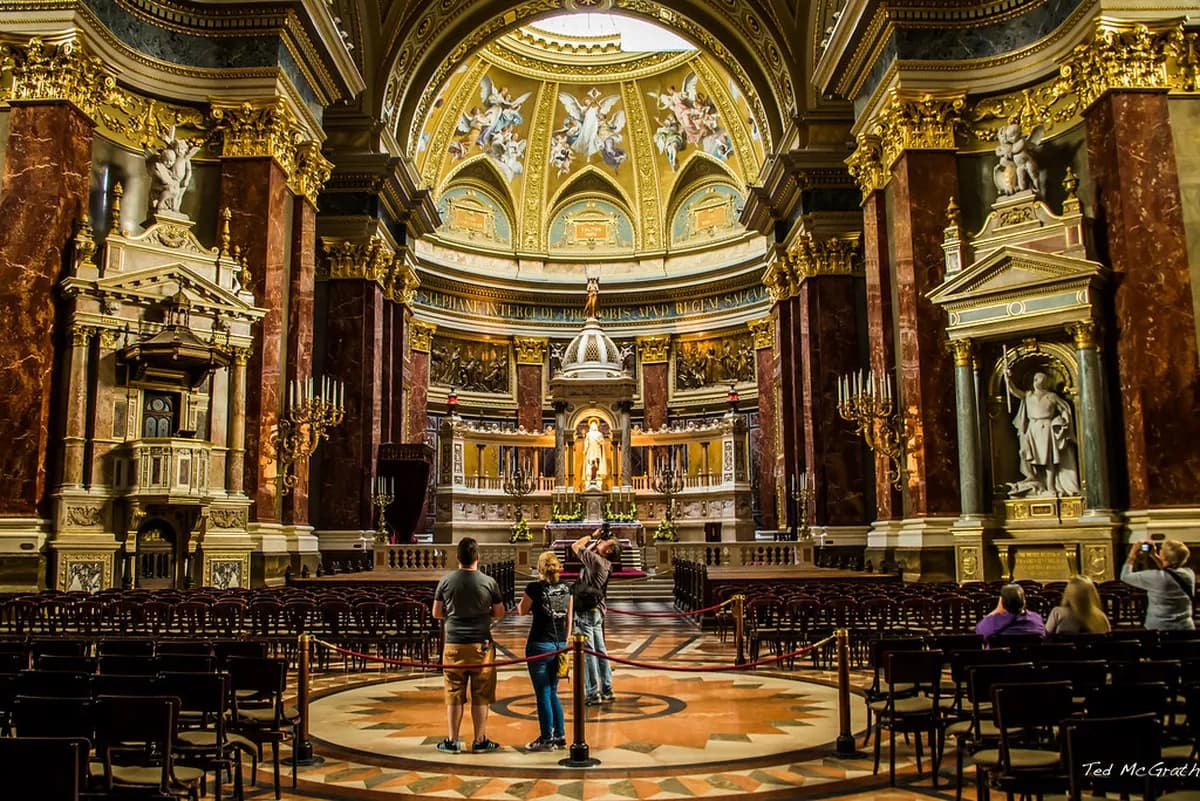
St. Stephen's Basilica honors Hungary's first king and holds his preserved right hand as a sacred relic. The basilica is free to enter, though a small donation is encouraged for the treasury and tower climb.
The tower offers one of the best panoramic views in central Pest, rising about 72 meters above street level. Evening visits during summer often coincide with organ concerts, which add a memorable layer to the experience.
The Great Synagogue on Dohány Street is the largest synagogue in Europe and a deeply moving historic site. Built in 1859, it anchors Budapest's historic Jewish Quarter and includes a museum, a cemetery, and a memorial garden. Entry costs around 6,000–8,000 HUF and includes access to all areas on the grounds. Allow at least 90 minutes to explore the space thoughtfully, especially the Hungarian Jewish Museum inside.
Heroes' Square at the end of Andrássy Avenue marks Hungary's 1,000-year history with striking statuary. The Millennium Monument, completed in 1900, features the Archangel Gabriel at its peak and Hungarian chieftains at its base. Both the Museum of Fine Arts and the Hall of Art flank the square if you want to extend your visit. Entry to the square itself is free, making it one of the top best free tourist attractions in Budapest.
- Hungarian Parliament Building
- Built: 1885–1904
- Tour time: ~45 minutes
- Cost: approx. 8,000–10,000 HUF
- Tip: book tickets online in advance
- Buda Castle and Castle Hill
- Best for: panoramic views and medieval history
- Grounds: free to enter
- Museums: separate entry fees apply
- Tip: arrive early or late afternoon
- St. Stephen's Basilica
- Highlight: sacred relic and tower views
- Entry: free (donation encouraged)
- Tower height: ~72 meters
- Tip: check for evening concert schedule
- Great Synagogue on Dohány Street
- Largest synagogue in Europe
- Cost: approx. 6,000–8,000 HUF
- Includes: museum, cemetery, memorial garden
- Tip: allow at least 90 minutes
- Heroes' Square and Millennium Monument
- Completed: 1900
- Entry: free
- Nearby: Museum of Fine Arts
- Tip: great for photos in morning light
Hidden Historical Gems Worth Finding
The Shoes on the Danube Bank is a quiet, powerful memorial that many visitors walk past without noticing. Sixty pairs of iron shoes mark the spot where Jewish Budapestians were shot into the river during World War II. The memorial is free to visit and sits along the Pest bank of the Danube, just south of the Parliament. It carries enormous emotional weight and deserves a slow, respectful visit rather than a quick photo stop.
Memento Park sits on the outskirts of Budapest and houses dozens of communist-era statues removed after 1989. Figures of Lenin, Marx, and Hungarian Soviet heroes stand in open-air rows, stripped of their original context. Getting there takes about 30–40 minutes by bus from central Pest, so plan it as a half-day side trip. Entry costs around 3,000–4,000 HUF and includes access to a Cold War bunker exhibit.
Vajdahunyad Castle in City Park looks medieval but was actually built in 1896 for Hungary's Millennial Exhibition. Its architecture blends Romanesque, Gothic, and Baroque styles into one photogenic complex beside a small lake. The Museum of Hungarian Agriculture inside makes it genuinely educational, not just decorative. Admission to the castle grounds is free; the museum charges a small separate fee.
History Through Culture: Baths and Architecture
Széchenyi Thermal Baths opened in 1913 and remain one of the finest examples of neo-baroque spa architecture in Europe. Beyond the relaxation angle, the baths carry real historic significance as a century-old public institution still in daily use. Entry fees run around 8,500–12,000 HUF depending on the day and cabin options you choose. Check our detailed guide on how to visit Széchenyi Thermal Baths without queuing before you go.
The baths suit history lovers who want an immersive cultural experience rather than a purely sightseeing-focused day. Plan for at least two to three hours if you want to explore the outdoor pools, indoor pools, and steam rooms properly. Weekday morning visits between 9 AM and noon are significantly quieter than weekend afternoons. Lockers and cabin rentals are available on-site, so you do not need to bring bulky luggage.
Tours and Cultural Immersion in Budapest
Guided tours make a noticeable difference when visiting dense historical sites like the Jewish Quarter or Castle Hill. A structured walk through the Jewish Quarter reveals layers of community history that plaques alone cannot convey. The Budapest City Walk in Jewish Quarter is a well-rated option that combines architecture, history, and personal stories. Most Jewish Quarter tours run 90–120 minutes and cost around €15–25 per person.
Free walking tours offer a low-commitment way to get oriented before diving deeper into specific sites. Operators typically run daily departures from central Pest and cover highlights like the Parliament, Basilica, and Andrássy Avenue. Tips are the only cost, making free tours ideal for budget-conscious history lovers who want local context. For a self-paced alternative, a detailed one-day plan is available in our Budapest 1-day itinerary for Buda Castle and Castle Hill.
Parliament building tours must be pre-booked, as visitor numbers are strictly capped each day. English-language tours run several times daily, but peak-season slots fill up weeks in advance. Booking directly through the official site avoids third-party markups and secures your preferred time slot. Factor in 20–30 minutes for security checks and queuing even with a pre-purchased ticket.
How to Plan Your Budapest History Day
Grouping attractions by riverside location saves considerable travel time across a full day of sightseeing. Pest-side sites — Parliament, Shoes on the Danube, Basilica, and the Jewish Quarter — connect easily on foot. Buda-side sites like Castle Hill and Memento Park work better as a separate half-day or dedicated second day. Our 3-day Budapest itinerary for top attractions maps this split in detail.
Budapest's public transport network covers most historic sites efficiently with trams, metros, and buses. A 72-hour travel pass from BKK – Centre for Budapest Transport offers unlimited rides and good value for multi-day visitors. Tram 2 along the Danube is a particularly scenic and practical route connecting the Parliament area to Castle Hill ferry points. Download the BudapestGO app to plan routes and check real-time schedules before heading out.
Start your Parliament visit first thing in the morning to beat tour groups that arrive mid-morning. Booking the Széchenyi Baths, Parliament, and any guided tours on the same day is usually too much — spread them out. Keeping one morning free for unplanned exploration often leads to the most memorable moments in this city. Always verify opening hours directly with attractions before visiting, as seasonal schedules can shift without much notice.
Frequently Asked Questions
What are the top Budapest attractions for history lovers on a first visit?
The Hungarian Parliament Building, Buda Castle, and the Great Synagogue on Dohány Street are the strongest starting points for first-time history-focused visitors. Heroes' Square and the Shoes on the Danube Bank round out a well-balanced historic itinerary. See our full tourist attractions in Budapest overview for additional context.
How much time should I plan for Budapest's historical sites?
Allow at least two full days to cover the major historic sites without feeling rushed. The Parliament tour alone takes 45–60 minutes including queuing. Castle Hill comfortably fills a half-day, and the Jewish Quarter rewards a slow morning of exploration at its own pace.
Are any top Budapest historical attractions free to visit?
Yes — Heroes' Square, the Shoes on the Danube Bank memorial, and the Fisherman's Bastion viewing area are all free. St. Stephen's Basilica is free to enter, though the tower and treasury have a small charge. Vajdahunyad Castle grounds are also free, with a separate museum fee inside.
Is Memento Park worth visiting for history lovers in Budapest?
Memento Park is a genuinely unique site that no other city offers in quite the same way. It works best for travelers with a strong interest in 20th-century Central European history or Soviet-era politics. The journey takes 30–40 minutes from central Pest, so plan it as a dedicated half-day rather than a quick add-on.
Do I need to book Budapest Parliament tours in advance?
Yes, advance booking is strongly recommended, especially from April through October when daily slots sell out fast. Tours are capped and English-language departures fill quickly in peak season. Booking directly on the official site secures your slot and avoids third-party fees.
Budapest offers history lovers a rare mix of imperial grandeur, wartime memory, and living cultural heritage all within a compact, walkable city. From the Parliament's gilded halls to the quiet grief of the Shoes on the Danube, every site tells a distinct chapter of the city's story. Combining a few major landmarks with one or two hidden gems creates a far richer experience than sticking to the main tourist circuit.
Good planning is the difference between a rushed checklist and a genuinely moving trip through Budapest's past. Pre-book time-sensitive tours like the Parliament, group your sites by neighborhood, and leave room for slow, unscheduled moments. Start your research with our 3-day Budapest itinerary to build a structured yet flexible plan for your visit.