
Tourist Attractions in Budapest
Budapest packs more genuine highlights per square kilometre than almost any city in Central Europe. The tourist attractions in Budapest range from UNESCO-listed riverbanks and Gothic Revival landmarks to steaming thermal baths and Europe's largest synagogue. Whether you have one day or a full week, knowing which sights reward your time — and which trade-offs matter — makes the difference between a good trip and a great one. This guide covers every major sight with honest timing, cost, and access details so you can plan with confidence.
Key Takeaways
- Book Parliament tours and Dohány Street Synagogue tickets at least one week ahead — both sell out regularly in summer.
- Visit Széchenyi Baths on a weekday morning for shorter queues and lower entry fees than weekend evenings.
- The Budapest Card is only worth buying for stays of three or more days with four or more paid attractions planned.
- Shoes on the Danube Bank, the Chain Bridge walk, Heroes' Square, and Andrássy Avenue are all free and genuinely unmissable.
- Szimpla Kert on Sunday morning offers a family-friendly farmers' market experience with free entry — a very different visit from the Friday night crowd.
- The Central Market Hall upper floor is the best-value spot for traditional Hungarian street food — avoid the tourist-facing counters near the entrance.
Central Market Hall
The Central Market Hall is Budapest's oldest and largest indoor market, built in 1897 and still buzzing with daily life. The ground floor sells fresh produce, paprika, salami, and local cheese at prices far below tourist-area restaurants. Entry is free, and most visitors budget 45 to 90 minutes to wander all three floors. The building sits at the Pest end of Liberty Bridge, making it an easy start or finish for a Danube Promenade walk.
The upper floor is the best-kept budget secret for hungry travellers: lángos stalls and Hungarian street food counters serve hot food at market prices. Souvenir stalls line the mezzanine level, selling embroidered linens, hand-painted ceramics, and bottled pálinka. Avoid the ground-floor tourist-facing deli counters near the entrance — they charge premium prices for the same products sold cheaper deeper inside. Go on a weekday morning for the thinnest crowds and the freshest produce selection.
Staying close to the market area makes early visits easy and comfortable. The MEININGER Budapest Great Market Hall is a well-located option right beside the building for travellers who want a central base. Budget travellers will also find solid options at Wombats City Hostel Budapest and Hostel One Budapest, both well-rated and centrally positioned. Booking ahead is advisable during summer and holiday weekends.
Buda Castle and Castle Hill
Buda Castle sits on a hilltop overlooking the Danube and remains one of the most recognisable best attractions in Budapest. The UNESCO-listed complex houses the Hungarian National Gallery and the Budapest History Museum, both worth at least a half-day visit. Getting up the hill is part of the experience: take the historic funicular from Clark Ádám Square, catch the 16 or 116 bus from Deák Ferenc tér, or walk up through the cobblestone streets of the Castle District. Budget two to four hours to cover the castle grounds, Fisherman's Bastion, and the views toward the Parliament building.
Fisherman's Bastion sits just north of the castle and offers some of the finest panoramic views across Pest and the Danube. The lower walkway is free; a small admission fee applies for the upper towers. Early morning visits reward photographers with soft light and minimal crowds before tour groups arrive. The nearby Matthias Church is worth a look even from the outside if you prefer to keep costs low.
First-time visitors often underestimate how much ground the Castle Hill area covers. Allow extra time if you plan to visit both the National Gallery and the History Museum in one go. The Buda Castle and Castle Hill one-day itinerary can help you sequence the sights efficiently. Comfortable shoes are essential — the cobblestones are uneven and the hill is steep in places.
Margaret Island
Margaret Island sits in the middle of the Danube between the Margaret Bridge and Árpád Bridge, accessible by tram 4 or 6 or bus 26. The island is car-free, which gives it a calm atmosphere completely different from the busier city sights. Entry to the island itself is free, and most visitors spend two to three hours exploring at a relaxed pace. Families, joggers, and couples all find something here — the running track that loops the island is one of the most popular in the city.
The Palatinus Lido open-air thermal pool is a great summer option for families, combining swimming with thermal water benefits. An open-air theatre hosts performances on summer evenings, making it a pleasant way to spend a Budapest night without the ruin-bar scene. In spring and autumn, the rose garden near the southern end of the island is at its most colourful. Rent a four-wheeled pedal cart at the island entrance for an easy way to cover the full two-and-a-half-kilometre length.
St. Stephen's Basilica
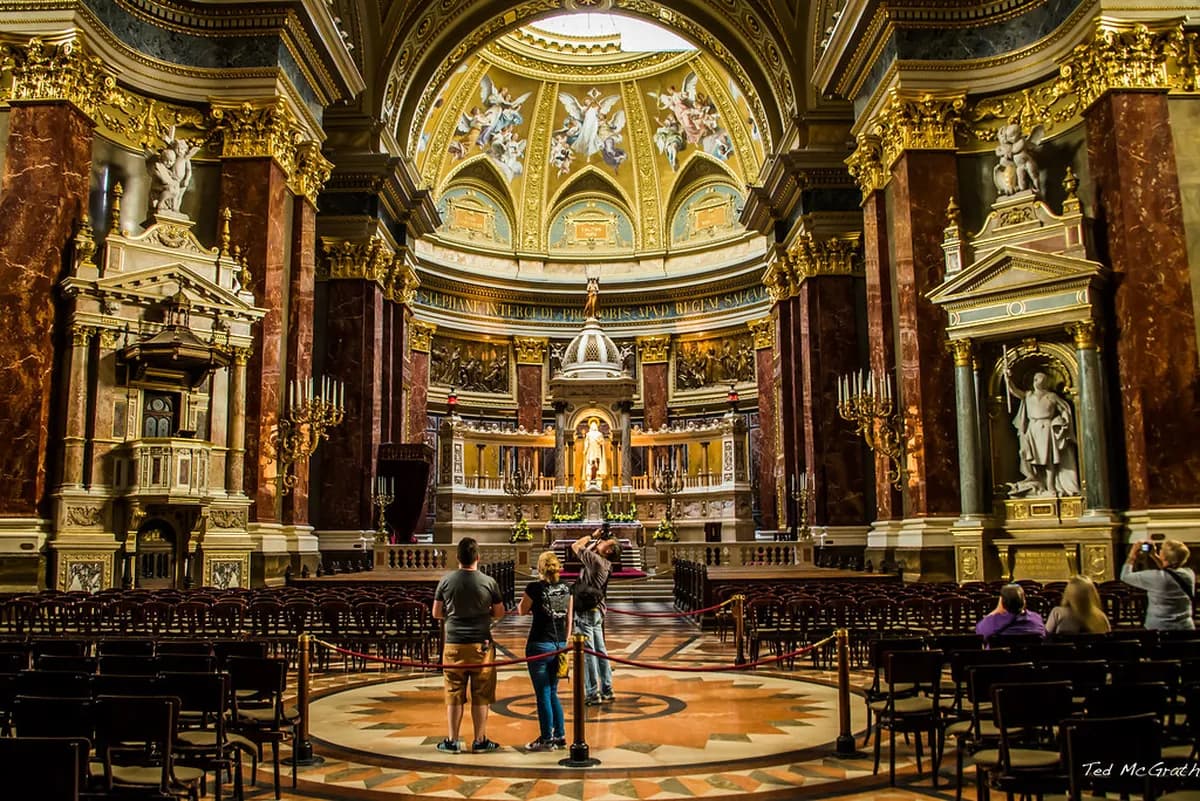
St. Stephen's Basilica anchors the heart of Pest with its neo-classical dome rising 96 metres above street level. The church interior is free to enter, while the dome climb costs a small fee and delivers a clear 360-degree view across the city.
Budget around 45 to 60 minutes for the church and dome together, or longer if you plan to linger over the rooftop views. The square outside is one of the best in Budapest for an outdoor coffee and a moment of calm between sights.
St. Stephen's Day on 20 August is Hungary's biggest national holiday, and the Basilica is the focal point of the celebrations. Fireworks over the Danube cap the evening with one of the most spectacular free shows in Central Europe.
If you're planning a Budapest trip around the St. Stephen's Day summer events, book accommodation at least two months in advance. The crowds are significant, but the atmosphere is genuinely unforgettable for first-time visitors.
Hungarian Parliament Building
The Hungarian Parliament Building is one of the most visited tourist attractions in the world, and its Gothic Revival riverside façade justifies the reputation completely. Guided interior tours run daily and cover the main staircase, the dome hall, and the Holy Crown of Hungary. Book tickets well in advance through the official Parliament visit ticketing page, especially during summer when tours sell out days ahead. The best exterior views come from the Buda side of the Danube, particularly from around Bem József tér at dusk when the building is floodlit.
Morning tours (before 10:00) tend to be less crowded than afternoon slots. Allow around 60 to 90 minutes for the guided tour itself, plus extra time if you want to photograph the exterior from the embankment. Non-EU citizens pay a higher entry fee than EU passport holders, so check current pricing before you book. The area around the Parliament connects naturally with a walk south to the Shoes on the Danube Bank memorial, covered in the next section.
For a deeper look at visiting logistics, the complete guide to visiting the Hungarian Parliament Building covers everything from queue tips to the best photo spots. First-time visitors to Budapest consistently rate it as one of the unmissable experiences in the city. Even if you skip the interior tour, the evening walk along the Danube embankment with the Parliament illuminated is worth the detour.
Dohány Street Synagogue
The Dohány Street Synagogue is the largest synagogue in Europe and the second largest in the world, seating up to 3,000 people. Built in 1859 in a Moorish Revival style, it anchors the historic Jewish Quarter of Budapest and carries significant emotional and historical weight. Guided tours run throughout the day and include the adjoining Hungarian Jewish Museum and the Raoul Wallenberg Memorial Garden. Budget around 90 minutes for the full site, including the memorial garden where thousands of victims of the 1944–45 Budapest ghetto are buried.
Timed-entry tickets sell out regularly during peak season, so booking ahead is strongly recommended rather than optional. This sight suits history-focused visitors and those with a connection to Jewish heritage more than casual sightseers who prefer outdoor exploration. The synagogue sits in the heart of the Jewish Quarter, making it a natural anchor for an afternoon that continues into the ruin bar district after closing time. Dress modestly; head coverings are provided for men at the entrance if needed.
Shoes on the Danube Bank
The Shoes on the Danube Bank is a free outdoor Holocaust memorial installed in 2005 along the Pest embankment, a short walk south of the Parliament. Sixty pairs of cast-iron shoes mark the spot where Arrow Cross militiamen shot Jewish citizens into the Danube in 1944 and 1945. There is no guided interpretation on-site, so reading about the memorial's history beforehand makes the visit far more meaningful. Budget 20 to 30 minutes here, and plan it as part of a longer embankment walk rather than a standalone trip.
Dusk is the most atmospheric time to visit — the low light and the illuminated Parliament building reflected in the river create a sombre and powerful setting. Solo travellers and history-focused visitors tend to find this memorial the most affecting free sight in the city. It pairs naturally with a Parliament exterior walk and, further south, the Chain Bridge crossing toward Buda. No entry fee, no booking required, and no opening hours — the memorial is accessible at any time of day or night.
Széchenyi Thermal Baths and the Budapest Spa Scene
Budapest sits on more than 100 natural thermal springs, and soaking in one of the city's historic bath complexes is genuinely unmissable. The three most popular options — Széchenyi, Gellért, and Rudas — each offer a different atmosphere, price point, and crowd level. Choosing between them before you arrive saves time and avoids disappointment, especially during peak summer season.
Széchenyi is the largest medicinal bath complex in Europe, with outdoor pools, indoor pools, and a full spa menu inside a Neo-Baroque palace in City Park. It draws the biggest crowds, particularly on weekend evenings during the popular sparty (spa party) events. Weekday mornings are noticeably quieter and often cheaper — book tickets online in advance to skip the entrance queue. The full guide to visiting Széchenyi Thermal Baths without queuing covers the best booking windows and what to bring.
Gellért Baths occupies an Art Nouveau hotel on the Buda side and attracts a slightly older, quieter crowd. The ornate interior pool is one of the most photographed in Budapest, and the outdoor wave pool is popular with families. Rudas Baths, by contrast, is a 16th-century Turkish hammam with a domed central pool and adults-only sessions on Friday and Saturday nights. Each bath charges entry fees that vary by day, time, and services selected — check current pricing on the official bath websites before your visit.
- Széchenyi Baths — largest complex
- Best for: first-timers, social atmosphere
- Pools: indoor and outdoor
- Crowds: high on weekends, moderate weekday mornings
- Access: Metro M1, Széchenyi fürdő stop
- Gellért Baths — Art Nouveau elegance
- Best for: couples, photography lovers
- Pools: ornate indoor pool, outdoor wave pool
- Crowds: moderate; quieter than Széchenyi
- Access: Tram 47/49, Szent Gellért tér stop
- Rudas Baths — historic Turkish hammam
- Best for: history seekers, adults-only evenings
- Pools: Ottoman domed central pool, rooftop pool
- Crowds: low on weekday mornings
- Access: Tram 19/41, Rudas gyógyfürdő stop
Andrássy Avenue, Ruin Bars, and the Jewish Quarter
Andrássy Avenue is Budapest's grandest boulevard, stretching from the city centre to Heroes' Square and lined with Neo-Renaissance palaces, embassies, and the State Opera House. The entire avenue holds UNESCO World Heritage status alongside the Budapest metro line running beneath it — the second oldest underground railway in the world. A self-guided walk from Deák Ferenc tér to Heroes' Square takes around 45 to 60 minutes at a relaxed pace. Hiring a local guide unlocks the architectural detail, Communist-era history, and courtyard secrets that most independent walkers miss entirely.
Heroes' Square at the far end of the avenue is free to visit and frames the Millennium Monument with statues of Hungary's founding chieftains. Vajdahunyad Castle, just behind the square in City Park, is a photogenic mix of architectural styles and costs nothing to view from the outside. The New York Café, a short detour from the avenue, is one of the most lavishly decorated coffee houses in Europe — worth at least a quick look even if you don't order. Allow two to three hours end-to-end if you include Heroes' Square and a City Park walk.
The Jewish Quarter sits just off the lower end of Andrássy Avenue and comes alive after dark with the ruin bar scene that Budapest has become known for across Europe. Szimpla Kert on Kazinczy Street is the original ruin bar — a labyrinthine space of mismatched furniture, vintage objects, and indoor plants filling a former factory courtyard. Sunday mornings bring a farmers' market with local food, coffee, and a relaxed family-friendly atmosphere that is completely different from the Friday and Saturday night crowds. Friday and Saturday nights are loud, crowded, and occasionally involve a cover charge — great for nightlife seekers, less ideal for those wanting a quiet drink.
For travellers who want the Jewish Quarter experience with historical depth, a guided tour of the ruin bars and Jewish Quarter adds context that self-guided visits rarely deliver. The nightlife crowd staying near this district will feel at home at The Hive Party Hostel Budapest, which sits close to the main ruin bar strip. Book ahead for any weekend stay in this neighbourhood — rooms fill quickly across all price ranges.
Planning Your Budapest Visit
The Budapest Card gives unlimited travel on the metro, trams, and buses plus discounts at more than 30 attractions for the duration of your card. It makes clear financial sense for travellers staying three or more days who plan to visit four or more paid attractions. For a one-night stopover, it rarely pays off — several of the best sights (Shoes on the Danube Bank, Chain Bridge walk, Andrássy Avenue stroll) are already free. Cards are available at BKK ticket machines across the city and at the airport.
Guided walking tours are worth the investment for first-time visitors and anyone with limited time. A quality local guide can cover the Jewish Quarter's layered history, Communist-era architecture, and hidden courtyard culture in two to three hours — research that would otherwise take days. Expect to pay roughly €15 to €40 per person for a reputable guided tour, depending on group size and itinerary depth. For a side-by-side comparison of guided versus self-guided options, the guided vs. self-guided Budapest attractions guide breaks down the trade-offs clearly.
Time Out Market Budapest opened inside the historic Corvin Palace on Blaha Lujza tér and offers 11 food kitchens, three bars, and five event spaces under one roof. Pricing is higher than street food at the Central Market Hall, but it works well for groups who want variety and a lively evening atmosphere in a single location. The market runs into the late evening, making it a practical last stop after a full day of sightseeing. For a full trip framework that connects the major sights efficiently, the 3-day Budapest itinerary is a reliable starting point.
Travellers watching their budget will find that Budapest rewards careful planning more than most European capitals. The Budapest attractions on a budget guide maps out which paid sights are genuinely worth the fee and which free alternatives match the experience. Additional budget-friendly accommodation options include Avenue Hostel and Maverick City Lodge, both well-reviewed and centrally located. Booking accommodation at least six to eight weeks ahead during summer and the December market season is strongly advised.
- Budget backpacker
- Top picks: Central Market Hall, Shoes on the Danube Bank, Andrássy Avenue walk
- Skip: full-price thermal bath weekends
- Tip: Visit baths on weekday mornings for lower rates
- Culture-focused traveller
- Top picks: Dohány Street Synagogue, Buda Castle, Hungarian Parliament tour
- Skip: Széchenyi weekend evenings (crowded, less reflective)
- Tip: Pre-book Parliament and synagogue tickets weeks ahead
- Family visitor
- Top picks: Margaret Island, Gellért wave pool, Central Market Hall
- Skip: Rudas adults-only night sessions
- Tip: Széchenyi weekday mornings work well with younger children
- Foodie
- Top picks: Central Market Hall upper floor, Time Out Market Budapest
- Skip: Váci Street restaurants (tourist-premium pricing)
- Tip: Ask locals for lángos stalls away from the main tourist drag
- Nightlife seeker
- Top picks: Szimpla Kert, ruin bar strip in the Jewish Quarter
- Skip: Szimpla Sunday morning if you want the full party energy
- Tip: Friday night is peak; arrive before midnight for shorter queues
Frequently Asked Questions
Which tourist attractions in Budapest are best for first-time visitors?
First-timers should prioritise the Hungarian Parliament Building tour, Buda Castle and Castle Hill, Széchenyi Thermal Baths, and the Central Market Hall. These four sights cover Budapest's history, architecture, culture, and food in roughly two days. The 3-day Budapest itinerary helps sequence them efficiently without unnecessary backtracking.
Is the Budapest Card worth buying for a short trip?
The Budapest Card pays off clearly for stays of three or more days with four or more paid attractions on your list. For a one or two night visit, calculate your actual entry costs first — many top sights, including Shoes on the Danube Bank, the Chain Bridge walk, and Andrássy Avenue, are free. Cards are sold at BKK machines and the airport.
What is the best time of day to visit the Hungarian Parliament Building?
Morning tours before 10:00 are consistently less crowded than afternoon slots. Book your guided interior tour at least several days ahead during summer — tickets sell out regularly. For exterior photography, dusk on the Buda side of the Danube gives the most dramatic floodlit views of the building.
What is the difference between Széchenyi Baths and Gellért Baths?
Széchenyi is larger, louder, and more social — with outdoor pools and a popular spa party scene on weekends. Gellért is quieter, more elegant, and housed in a beautiful Art Nouveau building on the Buda bank. Families often prefer Gellért's wave pool; sociable first-timers tend to enjoy Széchenyi's outdoor pool atmosphere more.
Which Budapest attractions are free or low-cost?
Several major Budapest sights cost nothing to experience: Shoes on the Danube Bank, the Andrássy Avenue walk, Heroes' Square, the exterior of Fisherman's Bastion, and Margaret Island are all free. The best free tourist attractions in Budapest guide lists additional no-cost options with practical visit details.
Budapest rewards visitors who move beyond the obvious highlights and take time to explore the quieter corners between the big sights. From the Parliament's floodlit riverbank to a Sunday morning lángos at the Central Market Hall, the city offers experiences that suit almost every travel style and budget. Start with the five must-cover landmarks, then layer in the thermal baths, the Jewish Quarter, and Andrássy Avenue based on your remaining time. Good planning — particularly booking the Parliament, Dohány Street Synagogue, and Széchenyi Baths in advance — will save you hours at the gate.
History lovers, budget travellers, families, and nightlife seekers all find their rhythm here without much compromise. Use the traveller-type table in the planning section to match your priorities to the right sights before you arrive. Budapest consistently surprises first-time visitors with how much a well-planned short trip can deliver, and how generously the city rewards a return visit.