
15 Must-Visit Historical Landmarks in Porto City Centre
Walking through the granite streets of Portugal's second city feels like stepping back in time. The must-visit historical landmarks in porto city centre offer a deep look into centuries of maritime power and religious devotion. From Romanesque cathedrals to ornate Baroque towers, the architecture here tells a story of resilience and wealth. This guide helps you navigate the most significant sites within the walkable UNESCO core.
Many visitors start their journey in the Ribeira district before climbing the steep hills toward the city's peaks. You will find that most of these tourist attractions in Porto are conveniently located near one another. Planning your route carefully ensures you see the best tile work and golden interiors without unnecessary backtracking. Get ready to explore the granite soul of this ancient Atlantic port.
1. Porto Cathedral (Sé do Porto)
The Porto Cathedral stands as a fortress-like monument overlooking the terracotta rooftops of the old town. Built originally in the 12th century, this structure serves as the city's oldest surviving building. Its Romanesque facade remains imposing, though later centuries added Baroque and Gothic flourishes. You can find more visitor details and reviews on Sé do Porto (Porto Cathedral) to plan your visit.
Inside, the Gothic cloisters decorated with blue and white tiles provide a peaceful escape from the busy streets. The silver altar in the Holy Sacrament Chapel represents a masterpiece of Portuguese silversmithing. Climbing to the upper terrace offers one of the best vantage points for photographing the Douro River. This landmark is an essential stop on any 3 day porto itinerary for history lovers.
- Porto Cathedral Visitor Information
- Cost: €3.00 for cloisters
- Hours: 9:00 AM - 6:30 PM
- Location: Terreiro da Sé
- Steepness: Moderate uphill walk
2. Clérigos Church and Tower
The Clérigos Tower is perhaps the most iconic silhouette in the Porto skyline. Designed by the Italian architect Nicolau Nasoni , it stands as a prime example of Baroque architecture. The tower was once the tallest building in Portugal and served as a lighthouse for ships. Its ornate stone carvings reflect the artistic wealth of the 18th century.
Reaching the top requires climbing 240 narrow steps through the stone interior. The effort pays off with a 360-degree view of the entire city and the river. During peak season, queues can be long, so booking a time slot online is highly recommended. This site is a highlight for those exploring best things to do in porto on a budget since the church interior is free.
- Clérigos Tower Quick Facts
- Steps: 240 to the top
- Architect: Nicolau Nasoni
- Cost: €8.00 (Tower + Museum)
- Local Tip: Visit at sunset
3. São Bento Train Station
Even if you are not catching a train, São Bento Station is a mandatory stop. The main vestibule contains over 20,000 azulejo tiles that depict major events in Portuguese history. Artist Jorge Colaço spent eleven years completing this massive ceramic puzzle. It remains one of the most photographed interiors in all of Europe.
The tiles illustrate famous battles, royal weddings, and the evolution of transport in the region. You can follow a how to see the best azulejo tiles in porto walking tour to understand the stories behind each panel. The station's Beaux-Arts exterior also adds a touch of Parisian elegance to the city centre. Early morning visits allow you to see the tiles without the heavy commuter crowds.
- São Bento Station Highlights
- Entry: Free for the hall
- Tile Count: 20,000+ pieces
- Best Time: Before 9:00 AM
- Location: Praça de Almeida Garrett
4. Livraria Lello
Livraria Lello is frequently cited as one of the most beautiful bookstores in the world. Its striking neo-Gothic facade hides an even more impressive interior with a grand crimson staircase. The stained-glass ceiling and intricate woodwork create an atmosphere of pure Victorian fantasy. It has become a global pilgrimage site for book lovers and architecture fans alike.
There is a common belief that this shop inspired J.K. Rowling’s Harry Potter series. However, the author has clarified that she never visited the shop while living in Porto, as seen in this J.K.
Rowling Lello Myth Debunked (Plataforma Media) report. Despite the debunked myth, the shop’s magical aesthetic remains undeniable and worth the entry fee. Buy your ticket voucher online to avoid the massive ticket office lines.
- Livraria Lello Entry Tips
- Cost: €8.00 (redeemable on books)
- Booking: Online voucher mandatory
- Crowds: Very high all day
- Style: Neo-Gothic / Art Nouveau
5. Palácio da Bolsa
The Palácio da Bolsa, or Stock Exchange Palace, represents Porto's 19th-century commercial power. This Neoclassical building was constructed on the ruins of a Franciscan convent. Each room is more opulent than the last, showcasing the wealth of the city's merchant class. It remains a functioning headquarters for the Porto Commercial Association today.
The highlight of the palace is undoubtedly the Arabian Hall . Inspired by the Alhambra, this room is covered in intricate Moorish-style carvings and gold leaf. You can only visit the interior via a guided tour, which usually lasts about 30 minutes. These tours are popular, so it is wise to book your spot as soon as you arrive in the city.
- Palácio da Bolsa Visit Info
- Access: Guided tours only
- Top Feature: Arabian Hall
- Cost: €12.00
- Location: Near Ribeira district
6. Church of São Francisco
Located right next to the Stock Exchange Palace, the Church of São Francisco offers a stark contrast. While its exterior is simple Gothic, the interior is an explosion of talha dourada (gilded woodwork). Experts estimate that over 300 kilograms of gold dust were used to cover the altars and columns. It is widely considered one of the finest examples of Baroque interior design in Portugal.
Beneath the floorboards, you can explore the catacombs where members of the Franciscan order and wealthy families are buried. The ossuary, containing thousands of human bones, provides a somber contrast to the glittering gold above. This site is perfect for a porto winter travel guide activity because the indoor experience is so extensive. Photography is strictly forbidden inside the church to protect the delicate gold leaf.
- São Francisco Church Details
- Cost: €9.00 (includes museum)
- Must-See: The Tree of Jesse
- Restriction: No indoor photography
- Feature: Historic catacombs
7. Fernandina Walls
The Fernandina Walls are the remnants of Porto's medieval defensive system. Named after King Fernando, these walls were completed in the 14th century to protect the growing city. Today, sections of the wall offer a unique walking path with stunning views of the Douro River. You can find access points near the Sé Cathedral or the base of the Luís I Bridge.
Walking along the battlements allows you to see the contrast between the ancient granite and modern city life. This is a great spot to spend a lazy afternoon in Porto while avoiding the biggest tourist crowds. The path is steep and involves many stairs, so wear comfortable shoes. It provides a rare look at the city's original medieval boundaries.
- Fernandina Walls Access
- Entry: Free for most sections
- Best View: Near Guindais Funicular
- Era: 14th Century
- Difficulty: High (steep steps)
8. Cais da Ribeira
Cais da Ribeira is the beating heart of Porto's historic riverside. This UNESCO World Heritage area was once the primary gateway for trade and maritime commerce. You can still see the Postigo do Carvão , which is the only remaining medieval gate leading to the river. The colorful facades and narrow alleys create a lively, historic atmosphere.
While it is now famous for restaurants and bars, the area retains its medieval layout. Look for the small shrines built into the walls, which sailors used for prayer before departing. For a different perspective, consider taking a Porto 6 Bridges Cruise & Wine Cellar Combo to see the waterfront from the water. It remains the most atmospheric place in the city centre for a walk.
- Ribeira District Highlights
- Must See: Postigo do Carvão
- Activity: Riverside walking
- Vibe: Historic and lively
- Location: Douro River bank
9. Santa Clara Church
Santa Clara Church is often described as Porto's best-hidden gem. Tucked away behind the city walls, its plain exterior masks one of the most incredible interiors in Portugal. Like São Francisco, it is covered in magnificent gold-leaf woodwork from the Baroque period. It was originally part of a 15th-century convent for the Order of Saint Clare.
The church recently underwent an extensive restoration to bring the gold back to its original luster. Because it is less famous than the main cathedral, you can often enjoy the space in relative silence. It provides a more intimate look at the talha dourada style than the larger churches. Entry is affordable and helps support the ongoing maintenance of the site.
- Santa Clara Church Info
- Cost: €4.00
- Style: Baroque / Manueline
- Crowds: Usually low
- Location: Largo 1º de Dezembro
10. Santo Ildefonso Church
Located near the Batalha Square, the Church of Santo Ildefonso is famous for its blue tile facade. Over 11,000 tiles cover the exterior, depicting the life of Saint Ildefonso and scenes from the Gospels. These tiles were added in 1932, much later than the church's 18th-century construction. The twin bell towers make it a prominent landmark in the upper city.
The interior features a beautiful retable by Nicolau Nasoni, the same architect who built the Clérigos Tower. Visiting this church is a great way to see high-quality azulejos without the crowds of São Bento. It sits at the top of a grand staircase, offering great photo opportunities of the surrounding streets. Many walking tours include this as a key stop for architectural history.
- Santo Ildefonso Highlights
- Tile Count: 11,000 tiles
- Entry: Free (donations welcome)
- Architect: Nicolau Nasoni (interior)
- Location: Praça da Batalha
11. Monastery of São Bento da Vitória
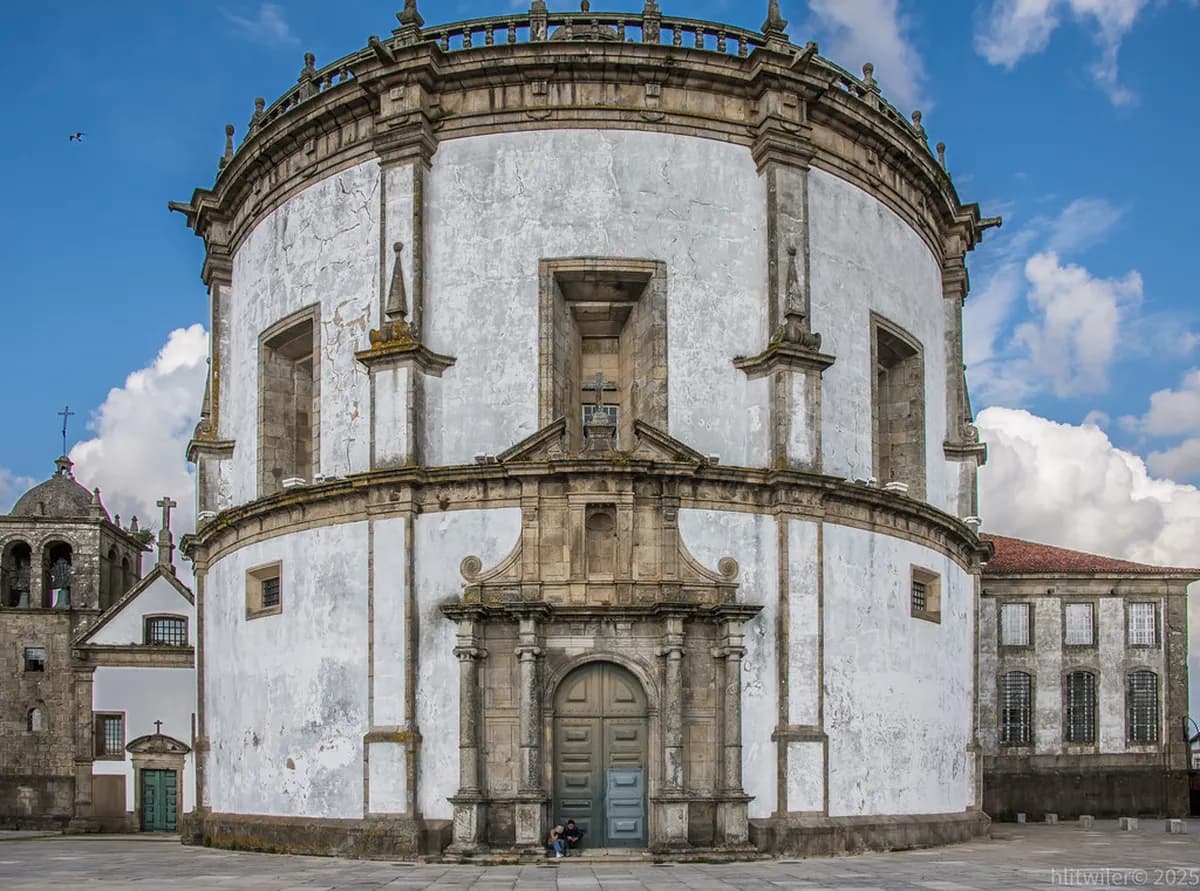
This massive monastery dominates the old Jewish Quarter, known as the Olival district. Built in the 16th century, it was once one of the most important religious houses in the city. Its scale reflects the power of the Benedictine order during the height of the Portuguese Empire. Today, it houses the National Theatre São João and various cultural archives.
The church interior features impressive woodwork and a grand organ that still functions. Guided tours provide access to the cloisters and the historic library, which are usually closed to the public. Exploring this area gives you a sense of the city's medieval layout and social history. It is a quieter alternative to the more famous landmarks nearby.
- Monastery Visit Details
- Feature: Historic Jewish Quarter
- Access: Tours available
- Era: Renaissance / Mannerist
- Location: Rua de São Bento da Vitória
12. Church of Lapa
The Church of Lapa holds a unique place in Portuguese history because it houses the heart of King Pedro IV . The monarch requested that his heart remain in Porto to honor the city's bravery during the Liberal Wars. It is kept in a bronze urn within the main altar, accessible during special tours. This landmark is a symbol of Porto's nickname, "The Unvanquished City."
The church is also home to one of the largest pipe organs in Europe, featuring over 4,000 pipes. If you visit during a service or concert, the acoustics are truly breathtaking. The surrounding cemetery is also worth a visit for its elaborate 19th-century tombs. It is located slightly north of the immediate centre but remains easily reachable by foot or metro.
- Church of Lapa Highlights
- Specialty: Heart of King Pedro IV
- Feature: Massive Pipe Organ
- Entry: Free for church
- Location: Largo da Lapa
13. Casa do Infante
Casa do Infante is traditionally believed to be the birthplace of Prince Henry the Navigator in 1394. This historic building served as the city's custom house and mint for several centuries. It is one of the oldest granite buildings in the Ribeira district. Today, it operates as a museum and the municipal archives of Porto.
Inside, you can see Roman mosaics and medieval foundations discovered during archaeological excavations. The museum explains Porto's role in the Age of Discovery and its economic importance to the crown. It is a fantastic stop for those who want to understand the city's maritime roots. The building itself is a rare example of medieval civil architecture in the city.
- Casa do Infante Facts
- Cost: €2.20
- Significance: Birthplace of Prince Henry
- Feature: Roman Mosaics
- Location: Rua da Alfândega
14. Carmo and Carmelitas Churches
At first glance, these appear to be one massive church, but they are actually two separate buildings. The Carmo Church and the Carmelitas Church are separated by a tiny, one-meter-wide house. This "hidden house" was built to ensure the monks and nuns from the two orders remained separate. It is now open to the public and offers a fascinating glimpse into 18th-century living.
The exterior of Carmo Church features a stunning wall of blue and white azulejos added in 1912. These tiles depict the founding of the Carmelite Order and are a favorite for photography. Inside, both churches boast elaborate gilded altars and impressive religious art. You can easily visit both in one stop near the University of Porto.
- Carmo & Carmelitas Info
- Must See: The Hidden House
- Tile Wall: Carmo Church exterior
- Cost: €3.50 for the house/museum
- Location: Rua do Carmo
15. Café Majestic
While it is a working restaurant, Café Majestic is a living landmark of the Belle Époque era. Opened in 1921, it remains one of the most beautiful historic cafes in the world. The interior features carved wood, ornate mirrors, and leather upholstery that transport you back to the 1920s. It was a famous meeting spot for the city's elite, artists, and intellectuals.
Visiting for a coffee or a traditional "Rabanada" is a great way to experience Porto's bourgeois history. Because of its fame, there is often a queue to get a table during the afternoon. It provides a more relaxed way to soak in the city's historical atmosphere compared to a museum. You can check the Official Porto Tourism - Porto Card site to see if any discounts apply to historic cafes.
- Café Majestic Visitor Tips
- Style: Art Nouveau
- Opened: 1921
- Best For: Afternoon tea
- Location: Rua Santa Catarina
Frequently Asked Questions
Which historical landmarks in Porto require advance booking?
You should book Livraria Lello, Palácio da Bolsa, and the Clérigos Tower in advance. These sites use time-slot systems to manage high visitor volumes. Booking online through the official sites helps you avoid hours of waiting in line during peak season.
Can you walk to all major landmarks in Porto city centre?
Yes, most landmarks are within walking distance, but Porto is very hilly and steep. Wear comfortable shoes and plan a route that moves from the top of the city down to the river. You can also use the Porto Card with Transport to save energy.
What is the oldest building in Porto?
The Porto Cathedral (Sé do Porto) is the oldest building in the city, dating back to the 12th century. While it has been modified over time, its core Romanesque structure remains intact. It serves as the historic and religious heart of the city centre.
Is the Porto Cathedral free to enter?
Entering the main nave of the Porto Cathedral is usually free for prayer and quick visits. However, there is a small fee of approximately €3.00 to access the Gothic cloisters and the museum. This fee is well worth it for the stunning tile work and views.
Porto's city centre is a treasure trove of history that rewards those who explore on foot. Each landmark offers a unique window into the religious, commercial, and royal past of Portugal. Whether you admire the tiles at São Bento or the gold at Santa Clara, the city's granite soul is unmistakable. Use this list to prioritize the sites that best match your architectural and historical interests.
Remember to book your time slots early for the most popular attractions like Livraria Lello. Take your time to wander the narrow alleys between these grand monuments to find hidden local details. Porto is a city that reveals its secrets slowly to those who look closely at its ancient walls. Enjoy your journey through one of Europe's most beautiful and historic urban landscapes.