
10 Essential Chapters of Modernisme Architecture in Barcelona Beyond Gaudí
Most visitors flock to the Sagrada Família or Park Güell when they arrive in the city. However, the Catalan Modernisme movement involved many other brilliant minds who shaped the urban landscape.
Exploring Modernisme architecture Barcelona beyond Gaudi reveals a world of intricate mosaics and colorful stained glass. This guide explores the masters and masterpieces that define the city's unique architectural identity.
The Catalan Modernisme Movement: A Cultural Revolution
Modernisme was more than just a style of building in late 19th-century Catalonia. It represented a cultural rebirth known as the Renaixença which sought to modernize Catalan society. Architects drew inspiration from nature and local traditions to create something entirely new. This era coincided with an economic boom that allowed wealthy families to fund these grand projects.
Walking through the Eixample district allows you to see how these designs transformed the city. You will notice organic shapes and vibrant ceramics on almost every corner. Many of these structures are now listed as essential tourist attractions in Barcelona for history lovers. The movement successfully blended industrial progress with artisanal craftsmanship.
While Gaudí is the most famous name, he was part of a larger community of creators. These artists competed to outdo one another with bolder colors and more complex structures. Their work turned the streets into an open-air museum for everyone to enjoy. Understanding this context helps you appreciate the small details found on local balconies and doorways.
The movement eventually faded as Noucentisme took over in the early 20th century. However, the legacy of these architects remains visible in the city's skyline today. Every tile and iron railing tells a story of a city finding its voice. You can still feel that revolutionary spirit when you look beyond the most famous monuments.
Lluís Domènech i Montaner: The Intellectual Mastermind
Lluís Domènech i Montaner was the scholar who gave the movement its theoretical foundation. He was a professor of architecture and a prominent politician in his time. His approach focused on exposing the structural elements of a building while decorating them heavily. He believed that architecture should serve the people and improve their daily lives.
His work is characterized by the use of red brick and intricate floral motifs. You can see his mastery in the way he integrated sculpture and ceramics into his facades. He often collaborated with the best craftsmen in Catalonia to ensure every detail was perfect. This dedication to quality made his buildings stand out among his peers.
Many of his projects are now recognized as UNESCO World Heritage sites for their innovation. He managed to balance traditional Catalan elements with modern industrial techniques effectively. His influence extended to his students, many of whom became famous architects themselves. He remains a pillar of the Catalan Modernisme movement and its enduring legacy.
Visitors often find his work more accessible and organized than Gaudí's more surreal designs. His buildings feel grounded in history while pushing the boundaries of contemporary art. Taking time to study his facades reveals layers of symbolic meaning and local pride. He truly was the intellectual engine behind the city's architectural transformation.
- Master of the Rational Modernisme
- Style: Structural and floral
- Best for: History enthusiasts
- Key Site: Palau de la Música
- Cost: Tours from €22
Josep Puig i Cadafalch: The Gothic-Modernist Fusion
Josep Puig i Cadafalch brought a unique medieval flair to the Modernista scene. He was deeply influenced by Northern European Gothic styles and traditional Catalan farmhouses. His buildings often feature pointed gables and ornate ironwork that look like they belong in a fairytale. This blend of old and new created a very distinct visual language.
One of his most famous works is the Casa de les Punxes, known for its sharp towers. You can find this landmark on the Avinguda Diagonal during a stroll through the city. It serves as a perfect example of his ability to modernize traditional castle-like features. Many travelers include it on a self guided Gothic Quarter walking tour itinerary even though it sits nearby in Eixample.
Puig i Cadafalch was also an archaeologist who worked to preserve Catalonia's Romanesque heritage. This passion for history is evident in the stone carvings and structural choices he made. He believed that the past should inform the future of Catalan architecture. His buildings often feel like a bridge between the Middle Ages and the 20th century.
He played a significant role in the planning of the 1929 International Exposition at Montjuïc. His versatility allowed him to design everything from private residences to massive public squares. While his style evolved over time, his commitment to Catalan identity never wavered. He remains a favorite for those who love romantic and historicist details.
Enric Sagnier: Barcelona’s Most Prolific Architect
The 'Sagnier Paradox' refers to the fact that Enric Sagnier designed more buildings than any other Modernista architect. Despite his massive output of over 300 projects, his name is rarely mentioned in basic guidebooks. He was the preferred architect for the city's wealthy elite and the Catholic Church. His work is scattered all over the city, hiding in plain sight.
Sagnier did not stick to one specific style, which makes his work harder to categorize. He moved easily between Modernisme, Neoclassicism, and Gothic Revival throughout his long career. You might recognize the Temple of the Sacred Heart atop Tibidabo mountain as one of his masterpieces. Consider a Barcelona to Tibidabo: Hidden Gems and Scenic views E-Bike Tour to see it up close.
His ability to adapt to his clients' needs made him incredibly successful and busy. He designed schools, banks, private villas, and even the city's Law Courts. While he was less experimental than Gaudí, his buildings are elegant and structurally sound. They provide the refined backdrop that defines much of the Eixample district today.
Visiting Sagnier's buildings offers a more realistic look at what the city's elite desired. He focused on comfort and prestige while still incorporating beautiful Art Nouveau details. His legacy is found in the sheer volume of high-quality architecture he left behind. Exploring his work is essential for anyone wanting to understand the full scope of the city's growth.
The Illa de la Discòrdia: A Rivalry in Stone
The Illa de la Discòrdia, or Block of Discord, is the ultimate showcase of architectural competition. Located on Passeig de Gràcia, it features buildings by Gaudí, Domènech i Montaner, and Puig i Cadafalch. These masters were commissioned by different families to create the most impressive facade on the street. The result is a stunning clash of styles that delights modern photographers.
Choosing which house to tour can be difficult because each offers a unique interior experience. Casa Amatller by Puig i Cadafalch retains its original furniture and feels like a lived-in home. Meanwhile, Casa Lleó Morera by Domènech i Montaner is famous for its exquisite woodwork and stained glass. You should learn how to book skip the line tickets Barcelona attractions to save time here.
The rivalry between these architects pushed them to use the most expensive materials available. You will see marble columns, gold leaf, and hand-painted tiles throughout the block. This area serves as a concentrated lesson in the diversity of Modernisme architecture Barcelona beyond Gaudi. Each building reflects the personality and social standing of its original owner.
Standing across the street gives you the best perspective on how these designs interact. The contrast between the organic curves of Casa Batlló and the stepped gables of Casa Amatller is striking. It is a rare place where you can compare the movement's three greatest masters in one glance. Do not rush through this section of the city as the details are endless.
- Illa de la Discòrdia Decision Matrix
- Casa Amatller: Best for original interiors
- Casa Lleó Morera: Best for craftsmanship details
- Casa Batlló: Best for organic fantasy
- Tip: Visit Amatller for chocolate
Recinte Modernista de Sant Pau: The Healing City
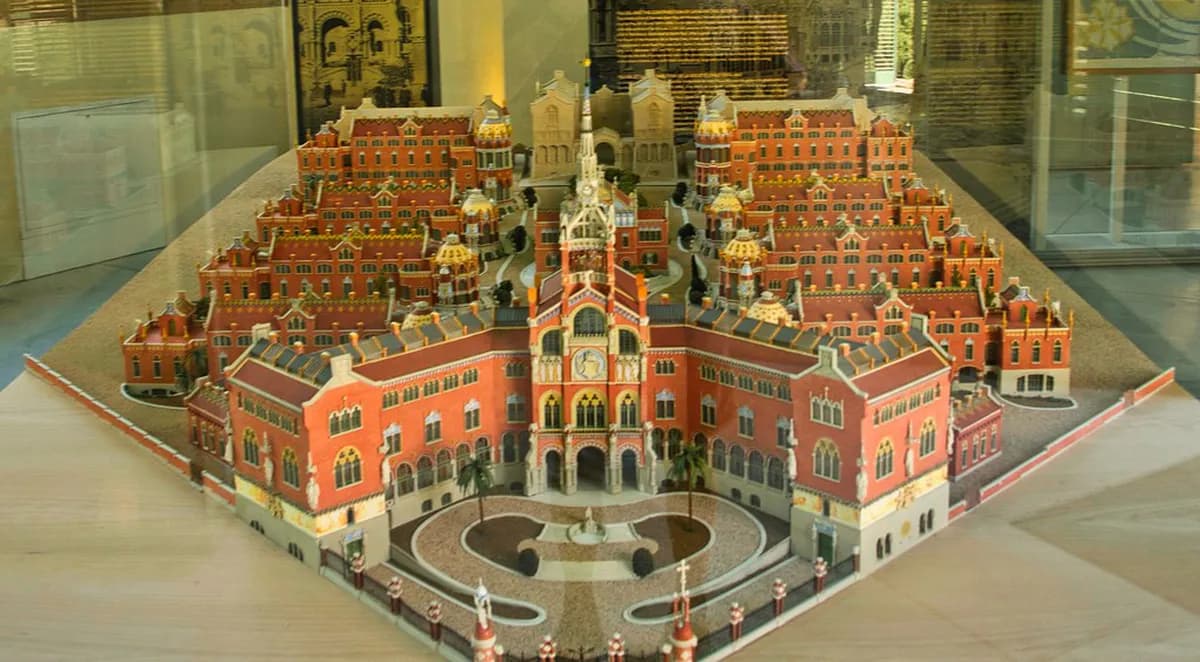
The Recinte Modernista de Sant Pau is the largest Modernista complex in the world. Designed by Domènech i Montaner, it served as a fully functioning hospital for many decades. He envisioned a 'healing city' where patients could recover surrounded by beauty and nature. The complex consists of several pavilions connected by underground tunnels.
The use of color and light in the pavilions was intended to lift the spirits of the sick. Bright mosaics and floral patterns cover the walls and ceilings of the treatment rooms. Large windows allowed for plenty of ventilation and sunshine, which was revolutionary for medical care at the time. Today, the site is a UNESCO World Heritage treasure that visitors can explore at their own pace.
Walking through the gardens feels peaceful and far removed from the busy city streets nearby. Each pavilion has a specific theme and was once dedicated to different medical departments. The restoration work has brought the original colors back to life with incredible precision. It is one of the most underrated sites in the city for architecture fans.
You can see the evolution of Domènech i Montaner's style as you move through the grounds. The administration pavilion is particularly grand, featuring a massive clock tower and ornate stone carvings. It serves as a testament to the idea that public infrastructure should be beautiful. This site offers a quiet alternative to the more crowded Gaudí landmarks.
Palau de la Música Catalana: The Symphony of Glass
The Palau de la Música Catalana is often considered the jewel of Catalan Modernisme. This concert hall was built for the Orfeo Català choral society and completed in 1908. Its most famous feature is the inverted stained-glass dome that serves as a natural skylight. During the day, the auditorium is flooded with colorful light without the need for lamps.
The facade is equally impressive, featuring sculptures of famous composers and intricate mosaic columns. It is tucked away in the narrow streets of the Sant Pere neighborhood, making its scale even more surprising. This building is a prime example of how Modernisme architecture Barcelona beyond Gaudi pushed structural limits. It is included on the UNESCO World Heritage List: Works of Antoni Gaudí alongside other masters.
The interior is a riot of color, with ceramic roses and stone muses decorating the stage area. Every surface is covered in detail, from the iron railings to the tiled floors. Attending a concert here is a magical experience, but guided tours are also available for those on a schedule. The acoustics are designed specifically for choral music, creating a unique sound environment.
Photographers will find endless inspiration in the grand staircase and the upper balconies. The use of natural motifs like trees and flowers creates an indoor forest effect. It remains one of the few concert halls in the world with a natural light source. Visiting the Palau is an essential part of any architectural tour of the city.
Castell dels Tres Dragons: The Brickwork Pioneer
The Castell dels Tres Dragons was built as the cafe-restaurant for the 1888 Universal Exposition. Designed by Domènech i Montaner, it marked a turning point in Catalan architecture. He chose to use exposed red brick and iron, which were seen as industrial materials at the time. This choice helped revive traditional Catalan brickwork techniques for a modern audience.
The building looks like a medieval fortress with its battlements and towers. However, the use of large windows and ceramic shields gives it a distinctly Modernista feel. It sits at the entrance of Parc de la Ciutadella, which is one of the best free things to do in Barcelona for budget travelers. You can admire the exterior while enjoying a walk through the park's gardens.
This project served as a laboratory for many of the techniques used in later masterpieces. Domènech i Montaner experimented with the integration of decorative arts and industrial structures here. The building later housed the Zoology Museum and is now used for scientific research. Its presence reminds us of the city's ambition during the late 19th century.
While you cannot always tour the interior, the facade is worth a close look. The ceramic frieze around the top features animals and plants in a stylized Art Nouveau fashion. It is a key stop for understanding the early stages of the Modernisme movement. The castle stands as a bold statement of Catalan identity and innovation.
The Pere Mata Institute: A Hidden Masterpiece in Reus
The Pere Mata Institute in Reus is often called the 'rehearsal' for the Hospital de Sant Pau. Domènech i Montaner designed this psychiatric hospital before starting his work on the larger Barcelona project. It allowed him to test his theories on how architecture could aid in mental health recovery. The site remains an active medical facility but offers tours of its most historic wing.
The 'Pavelló dels Distingits' is the highlight of the institute, featuring incredibly opulent decoration. It was built for wealthy patients and looks more like a palace than a hospital ward. You will find stunning stained glass, silk wall coverings, and hand-carved wooden ceilings. This level of luxury was meant to provide a familiar and soothing environment for the residents.
A day trip to Reus is highly recommended for serious architecture enthusiasts. The city was the birthplace of Gaudí and contains many other Modernista gems. It offers a quieter experience compared to the busy streets of the Catalan capital. You can see how the movement flourished in other parts of Catalonia during this prosperous era.
The institute is a prime example of the 'total work of art' philosophy of the time. Every piece of furniture and light fixture was designed to match the overall aesthetic. Seeing this site provides a deeper understanding of the evolution of the 'healing city' concept. It is a hidden treasure that many tourists unfortunately miss.
Practical Planning: Tours, Tickets, and Timing
Planning your architectural tour requires some strategy to avoid long waits and high costs. Many of these sites require advance booking, especially during the busy spring and summer months. You should check the Official Sagrada Família Ticket Portal for the most accurate pricing and availability. Combining multiple sites into one day can save you time on travel between neighborhoods.
Consider using the public transport system to navigate between the Eixample and other districts. The metro is efficient and reaches almost all the major Modernista landmarks easily. If you prefer walking, a Barcelona Turisme Gothic Tour can provide great context for the city's older history. This helps you understand how the Modernisme style eventually broke away from traditional forms.
A well-planned Barcelona 3 day itinerary for first time visitors should balance famous sites with hidden gems. Try to visit the most popular houses early in the morning to beat the crowds. Many smaller Modernista buildings are free to admire from the outside and offer great photo opportunities. Don't forget to look up at the ceilings and balconies as you walk.
Many sites offer discounts for students, seniors, and large groups if booked in advance. Always carry a digital or printed copy of your tickets to ensure a smooth entry process. Some locations have strict photography rules, so check the signs before taking out your camera. Taking a break at a local cafe in a Modernista building is a great way to soak in the atmosphere.
Frequently Asked Questions
Who were the main architects of Modernisme besides Gaudí?
The two most significant figures are Lluís Domènech i Montaner and Josep Puig i Cadafalch. Domènech i Montaner designed the Palau de la Música, while Puig i Cadafalch is famous for Casa Amatller. Enric Sagnier was also incredibly prolific, designing over 300 buildings across the city. Many of these sites are top tourist attractions in Barcelona today.
Is the Hospital de Sant Pau worth visiting?
Yes, it is the largest Modernista complex in the world and a UNESCO site. It offers a unique look at how architecture was used to improve medical care. The site is less crowded than Gaudí's works, making it a peaceful experience for visitors. The intricate mosaics and gardens are truly stunning.
What is the Block of Discord in Barcelona?
The Illa de la Discòrdia is a famous block on Passeig de Gràcia. It features three different Modernista houses designed by the movement's greatest masters. These buildings sit side-by-side, showcasing a fierce architectural rivalry from the early 20th century. It is a must-see for any fan of design.
How do I see the Palau de la Música Catalana without a concert ticket?
You can book a guided tour to see the interior and learn about its history. These tours run daily and provide access to the stunning auditorium and the rehearsal hall. It is best to book online in advance to secure your preferred time slot. The tour highlights the incredible use of natural light.
Exploring Modernisme architecture Barcelona beyond Gaudi provides a complete picture of the city's artistic soul. From the healing pavilions of Sant Pau to the glass ceiling of the Palau, these sites are unforgettable.
The works of Domènech i Montaner, Puig i Cadafalch, and Sagnier offer endless beauty and historical depth. Plan your visit today to discover the diverse masters of this incredible cultural revolution.