
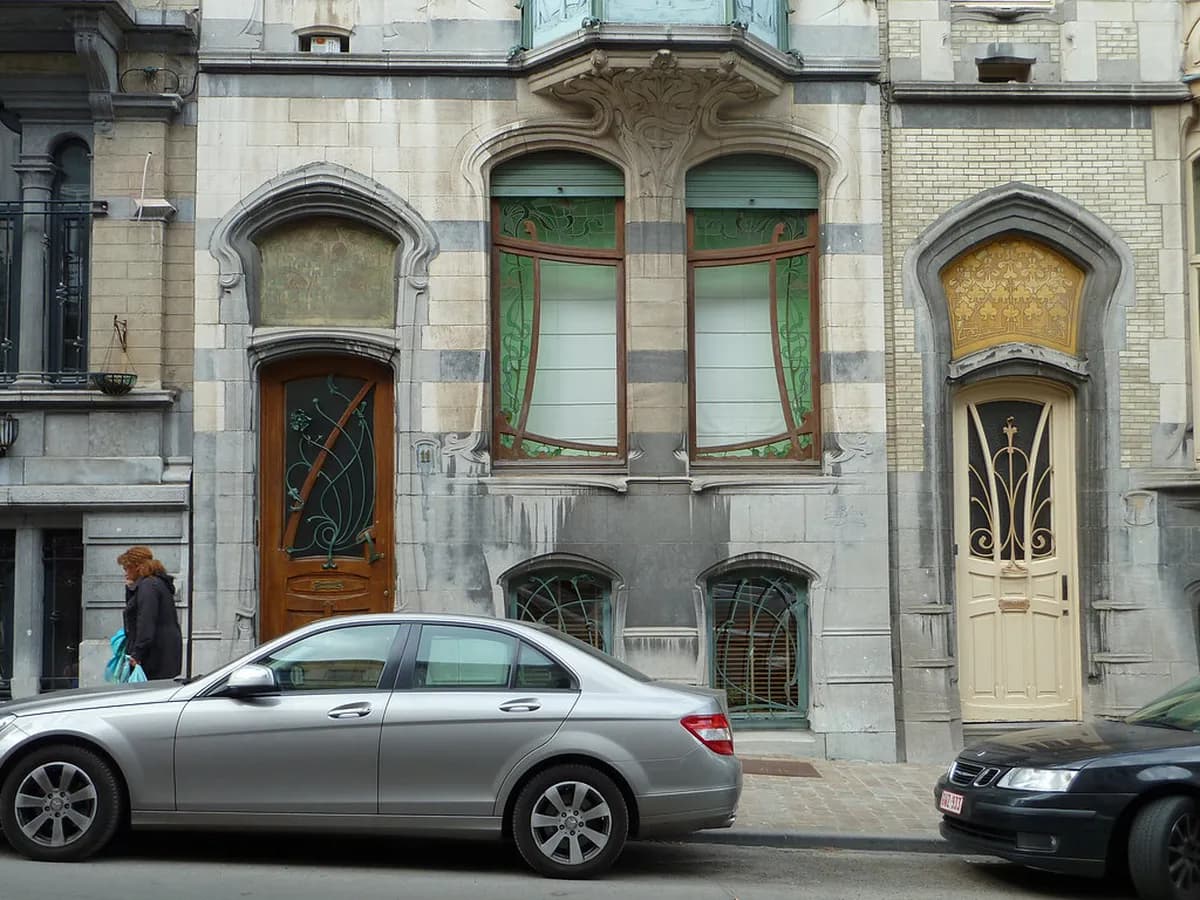
13 Best Art Nouveau Architecture Highlights In Brussels: Horta Museum And Beyond
Brussels transformed into a laboratory of modern design during the late nineteenth century.
Architects like Victor Horta broke away from historical styles to create something entirely new.
They used iron, glass, and wood to mimic the flowing curves of nature.
Today, finding the best Art Nouveau architecture in Brussels: Horta Museum and beyond is a top priority for culture seekers.
Horta Museum
The Horta Museum serves as the former home and studio of the legendary architect Victor Horta. This UNESCO World Heritage site showcases the perfect harmony of iron, glass, and wood. You will find it in the vibrant Saint-Gilles district among many other tourist attractions in Brussels. The interior remains remarkably preserved to reflect Horta's original vision.
Visitors often admire the central staircase that winds upward toward a stunning glass skylight. Every door handle and light fixture was custom-designed by Horta himself to match the organic theme. You should note that photography is strictly forbidden inside the museum to protect the delicate materials. This rule allows you to fully immerse yourself in the atmospheric 1890s environment.
Planning your visit requires checking the Visit Brussels - Official Tourism Site for current opening hours. The museum usually operates in the afternoons and requires a timed entry ticket. Booking online well in advance is essential because daily capacity is quite limited. This site remains the heart of the Belgian Art Nouveau movement for every traveler.
- Essential Visitor Information for Horta Museum
- Location: Saint-Gilles district
- Best for: Architecture enthusiasts
- Cost: Approximately 12 Euros
- Booking: Online reservation required
Solvay House
Armand Solvay gave Victor Horta a massive budget to build this opulent townhouse on Avenue Louise. The architect used this freedom to create his most luxurious and complex residential work. You will notice a warm palette of orange, red, and gold throughout the grand rooms. These colors were chosen to create a welcoming glow even on gray Belgian days.
The house features an innovative ventilation system and rare exotic woods from across the globe. It represents the peak of Horta's career when he had no financial constraints. Many experts consider this building the most complete expression of his genius. The flow of space between the reception rooms remains a highlight for modern visitors.
Access to Solvay House is much more restricted than other local museums. You typically need to book your tour at least three months before your arrival date. Tours are often led by expert guides who explain the intricate social history of the Solvay family. This exclusive experience is worth the extra effort for serious design lovers.
- Key Features of the Solvay House
- Style: Luxury Art Nouveau
- Architect: Victor Horta
- Highlights: Orange-red staircase
- Access: Guided tours only
Cauchie House
Paul Cauchie was an artist who specialized in the decorative technique known as sgraffito. He designed this house near Parc du Cinquantenaire to serve as a living advertisement for his work. The facade features massive allegorical figures painted directly into the plaster. You can easily include this stop in a 3 days in Brussels itinerary 2026 for a well-rounded trip.
The interior of the house is equally impressive with its murals and golden accents. It tells the story of Paul and his wife Lina, who was also a talented artist. They used their home to showcase their creative skills to potential wealthy clients. The dining room is particularly famous for its elegant female figures and floral patterns.
Recent restoration efforts have brought the vibrant colors of the facade back to life. You can visit the ground floor and basement during specific weekend openings throughout the year. It offers a more colorful and graphic alternative to Horta's organic wood-based style. This house remains one of the most photographed buildings in the Etterbeek neighborhood.
- Visitor Guide for Cauchie House
- Location: Rue des Francs
- Best for: Photography lovers
- Feature: Sgraffito murals
- Vibe: Artistic and intimate
Musical Instruments Museum (MIM)
The Musical Instruments Museum is housed in the former Old England department store. Architect Paul Saintenoy used a daring combination of wrought iron and glass for the facade. This industrial approach allowed for massive windows that flooded the interior with natural light. It stands as a landmark near the Place Royale in the city center.
The black ironwork features intricate floral patterns that climb up the side of the building. You can take a vintage elevator to the top floor for one of the best views in the city. The rooftop restaurant provides a 360-degree panorama of the Brussels skyline. It is a perfect spot to rest after exploring the vast collection of instruments.
Unlike private houses, the MIM is a public museum with regular daily hours. You do not usually need to book weeks in advance to see the exterior or the exhibits. The building demonstrates how Art Nouveau was used for commercial spaces, not just private luxury homes. It remains a staple for anyone interested in the structural engineering of the era.
- MIM Building Highlights
- Material: Wrought iron
- Architect: Paul Saintenoy
- View: Rooftop terrace
- Function: Public museum
Comics Art Museum
Victor Horta designed the Waucquez Warehouse in 1906 for a wealthy textile merchant. The building now serves as the Belgian Comic Strip Center, blending two local passions. You can see how Horta adapted his style for a functional, industrial purpose. It is a key stop on the Brussels comic strip trail for fans of Tintin and Smurfs.
The central hall features a magnificent glass roof supported by slender iron columns. This design allowed workers to inspect fabrics under natural light without any shadows. You will notice the grand staircase that feels much more open than Horta's residential designs. The use of white stone creates a bright and airy atmosphere throughout the galleries.
This site is excellent for families because it offers something for both children and adults. You can admire the architecture while the kids explore the history of Belgian cartoons. The museum shop is also located in a beautifully preserved part of the original warehouse. It remains one of the most accessible Horta buildings in the city center.
- Comics Art Museum Visitor Info
- Location: Rue des Sables
- Best for: Families
- Architect: Victor Horta
- Entry: Included in passes
Maison Hannon
Maison Hannon offers a fascinating contrast to the typical Belgian Art Nouveau style. Architect Jules Brunfaut drew heavy inspiration from the French symbolist movement for this project. The result is a house that feels more dreamlike and ornate than Horta's structural works. You can find more information about its heritage on the Urban Brussels - Art Nouveau Heritage website.
The interior features a massive circular staircase and large-scale murals by Paul Baudouin. These paintings depict scenes of nature and mythology in soft, pastel tones. Unlike the Horta Museum, Maison Hannon generally allows visitors to take photos inside the rooms. This makes it a favorite for modern travelers who want to share their trip on social media.
The house underwent a major restoration and reopened to the public in 2023. It now serves as a museum that highlights the international connections of the Art Nouveau movement. You should compare the floral motifs here to the more geometric lines found in later Belgian works. It sits just a short walk away from the Horta Museum in Saint-Gilles.
- Maison Hannon Experience
- Style: French Symbolist
- Feature: Large murals
- Rule: Photography allowed
- Status: Recently restored
Hotel van Eetvelde & LAB·An
Edmond van Eetvelde was a high-ranking official who wanted a home that reflected his status. Victor Horta designed a central winter garden with a breathtaking stained-glass dome for him. This dome is supported by delicate iron pillars that look like climbing vines. The light filtering through the glass creates a magical atmosphere in the heart of the house.
The building recently expanded its public offer by opening the LAB·An space. This area serves as a research and promotion center for Art Nouveau heritage in Brussels. You can see contemporary exhibitions that link historical design to modern urban challenges. It is located near the Square Ambiorix, which is famous for its architectural variety.
You will find that the Hotel van Eetvelde uses materials sourced from the Congo. This reflects the complex history of Belgium during the reign of King Leopold II. The use of mahogany and ivory was common in luxury homes of this specific period. Exploring this site provides deep insight into the social and political context of the 1890s.
- Van Eetvelde House Details
- Highlight: Glass dome
- New Space: LAB·An
- Location: European Quarter
- Significance: UNESCO site
Autrique House
The Autrique House represents the very first major project designed by Victor Horta in 1893. It marks the transition from traditional nineteenth-century architecture to the new Art Nouveau style. You can see the early experiments with iron and light that would later define his career. The house is located in the Schaerbeek district and offers a quieter museum experience.
The interior has been carefully restored to show how a middle-class family lived during the Belle Époque. You can explore the basement kitchen, the formal reception rooms, and the private bedrooms. The attic often hosts temporary exhibitions related to architecture or local history. It provides a more intimate look at Horta's work before he became internationally famous.
Travelers on a budget can find this site particularly appealing for its lower entry fees. You can learn about the building's history through a detailed audio guide or printed brochures. It is a great starting point for those who want to see the evolution of Horta's genius. The facade is simple but hints at the revolutionary changes happening inside.
- Autrique House Visitor Tips
- Location: Schaerbeek
- Best for: History buffs
- Significance: Horta's first work
- Price: Budget-friendly
Tassel House
The Tassel House is widely considered the first true Art Nouveau building in the world. Completed in 1893, it broke all the rules of traditional residential design. Horta replaced thick internal walls with iron columns to create an open floor plan. This allowed light to reach the center of the house for the first time in Brussels.
You should be aware that the Tassel House remains a private residence today. This means you cannot usually enter the building to see the famous staircase and murals. However, the exterior facade is still a must-see for any architecture fan visiting the city. It features the signature curved lines and integrated ironwork that Horta made famous.
The building is located on Rue Paul Emile Janson, very close to the Avenue Louise. You can easily walk here after visiting the Solvay House or the Horta Museum. It is a quiet street that allows you to admire the details without too much traffic. Seeing the birthplace of the movement is a powerful experience for any traveler.
- Tassel House Viewing Guide
- Access: Exterior only
- History: World's first
- Location: Near Avenue Louise
- Architect: Victor Horta
Max Hallet House
The Max Hallet House is another Horta masterpiece located on the prestigious Avenue Louise. It was designed for a prominent lawyer and features a grand, theatrical interior. The central staircase is the heart of the home and is bathed in light from a glass roof. Floral motifs and whiplash lines decorate every corner of the reception rooms.
This house is only open to the public during special guided tours or events. You must plan ahead and check for availability through local heritage organizations. The tours provide a rare chance to see how the wealthy elite lived during the Art Nouveau era. It is one of the most well-preserved examples of Horta's residential work.
The facade is more sober than some of Horta's other buildings, but the interior is truly spectacular. You will see how the architect used color and light to create a sense of movement. It is a perfect example of the 'total work of art' philosophy where every detail matters. This stop adds a layer of exclusivity to your architectural tour.
- Max Hallet House Highlights
- Best feature: Grand staircase
- Access: Limited tours
- Location: Avenue Louise
- Vibe: Theatrical and grand
Wolfers Brothers Stores
The Wolfers Brothers Stores were originally a high-end jewelry shop designed by Horta in 1909. While the original building on Rue d'Arenberg still exists, the famous interior has moved. You can now see the fully reconstructed jewelry shop inside the Art & History Museum. This allows you to see the mahogany furniture and glass displays in a controlled environment.
Horta designed everything from the counters to the light fixtures for the Wolfers family. The shop was meant to be as luxurious as the diamonds and silver sold inside. You can see how his style became more refined and geometric toward the end of the movement. It provides a unique look at Art Nouveau applied to retail design.
Visiting the Art & History Museum is a great way to see multiple styles in one place. You can use your ticket to explore other free things to do in Brussels nearby. The museum is located in the Cinquantenaire Park, which is a beautiful place for a walk. This Horta interior is a hidden gem that many tourists miss.
- Wolfers Interior Guide
- Location: Art & History Museum
- Type: Retail interior
- Material: Mahogany wood
- Entry: Museum ticket
Foundation Frison Horta
The Foundation Frison Horta is located in a house that Victor Horta designed for his friend Maurice Frison. It is currently a living restoration project that aims to preserve the architect's legacy. You can book a private guided tour to see the ongoing work and learn about restoration techniques. This provides a more personal and hands-on experience than a traditional museum.
The house features a beautiful winter garden and original furniture designed by Horta. The foundation also hosts cultural events and workshops to keep the spirit of Art Nouveau alive. You will find it in the heart of the city center near the Grand Place. It is a wonderful example of how historical buildings can be repurposed for modern use.
Supporting the foundation helps ensure that these delicate structures survive for future generations. You can see the passion of the restorers as they carefully clean every piece of iron and glass. The intimate setting allows for deep conversations about Horta's life and influence. It is a must-visit for those who want to go beyond the surface of the movement.
- Foundation Frison Horta Info
- Status: Living restoration
- Access: Private tours
- Location: City center
- Focus: Heritage preservation
Practical Guide: Art Nouveau Pass and Booking Tips
The Art Nouveau Pass Official Site offers the best value for visiting multiple locations. You can choose between a 3-site or 5-site pass depending on your schedule and interest. This pass often includes discounts for guided tours and shop purchases at participating museums. It is the most efficient way to manage your budget while seeing the top highlights.
Booking your entry times is the most important step in planning your architecture tour. Sites like Solvay House and Horta Museum sell out weeks or even months in advance. You should create a spreadsheet to track your reservations and travel times between districts. Many travelers find that grouping sites by neighborhood, like Saint-Gilles, saves a lot of time.
You might also want to maximize the Brussels Card if you plan to visit other attractions. While the Art Nouveau Pass is specialized, the Brussels Card covers a wider range of general museums. Check which pass offers the best ROI based on your specific must-see list. Both options help you skip the lines and enjoy a smoother experience.
- Booking and Pass Summary
- Best Value: Art Nouveau Pass
- Advance Booking: 3+ months
- Travel Tip: Group by district
- Resources: Official Pass Site
Frequently Asked Questions
Who was Victor Horta and why is he famous?
Victor Horta was a Belgian architect who pioneered the Art Nouveau movement in the 1890s. He is famous for replacing traditional walls with iron supports and using organic, flowing lines. His work changed how people thought about light and space in modern homes.
Is the Horta Museum worth visiting for non-architects?
Yes, the Horta Museum is worth visiting for anyone who appreciates beautiful design and history. The level of detail in the furniture and glasswork is truly stunning to see in person. It offers a unique look into a revolutionary artistic era in Brussels.
How do I use the Brussels Art Nouveau Pass?
You can buy the pass online and use it to book entries for 3 or 5 specific sites. It is valid for several months, allowing you to spread your visits over multiple days. Check the Art Nouveau Pass Official Site for current pricing.
Which Art Nouveau houses in Brussels require advance booking?
The Solvay House and Horta Museum are the most critical sites that require advance booking. Solvay House often fills up three months ahead of time for weekend slots. Maison Hannon and Hotel van Eetvelde also recommend online reservations during peak travel seasons.
Can you see the Tassel House interior?
The Tassel House interior is generally closed to the public because it is a private residence. You can only admire the famous facade from the street. Occasionally, it opens for special heritage days, but these events are very rare and sell out fast.
Brussels remains the undisputed capital of Art Nouveau architecture in Europe.
From the organic genius of Victor Horta to the colorful sgraffito of Paul Cauchie, the city is an open-air museum.
Plan your trip carefully by booking your favorite sites well in advance.
Exploring these 13 highlights will give you a deep appreciation for the beauty and innovation of the Belle Époque.