
Your Medici Villas Florence Hidden Gems Guide
Most visitors to Florence walk past the Uffizi queue and never learn that a free UNESCO villa sits just 15 minutes away by car. This Medici Villas Florence hidden gems guide covers which properties to visit, what they cost, and how to avoid the rookie mistakes that waste half a day. The Medici built more than a dozen country estates across Tuscany — some are wide open, some require appointments, and a few are exterior-only. Knowing the difference before you leave central Florence saves real time and money.
Must-See Medici Villas Near Florence
Three villas stand out for first-time visitors looking for the best top tourist attractions in Florence Italy beyond the city center. Villa La Petraia offers a free garden and a €6 guided interior tour, making it one of the most accessible UNESCO sites near the city. Villa Medicea di Poggio a Caiano charges nothing for entry to either the villa or the garden — a genuine surprise for budget-conscious travelers. Villa di Castello sits about 500 metres from Petraia and is worth pairing on the same half-day outing.
Petraia is closed on Tuesdays, so plan around that hard constraint before booking transport. Poggio a Caiano sits roughly 20 km northwest of Florence and rewards anyone willing to make the slightly longer drive. Castello's garden features Giambologna's famous mythological statuary, which alone justifies the short detour from Petraia. According to Florence Local Guides, these three villas consistently attract the most repeat visitors among the UNESCO-listed group.
Art, Frescoes, and Cultural Interiors Worth Knowing
Poggio a Caiano contains one of the finest fresco cycles of the Italian Renaissance, covering the grand salon on the piano nobile. Pontormo and Andrea del Sarto both contributed to those walls — a fact that surprises visitors expecting a modest country retreat. For travelers already exploring Last Supper paintings in Florence, the Poggio frescoes offer a comparable level of narrative storytelling. Booking a timed slot in advance ensures you see the salon at its best without crowding.
Villa La Petraia's interior tells a different story — one shaped as much by the House of Savoy as by the Medici. King Victor Emanuel II covered the open courtyard in 1877, installing a ballroom ceiling that partially obscures the original Medici-era frescoes below. Understanding this Savoy intervention helps visitors appreciate what is original Renaissance decoration and what is 19th-century royal renovation. As Firenze Made in Tuscany notes, the layered history is what makes Petraia genuinely different from a standard period-room museum.
Gardens, Parks, and Outdoor Spaces
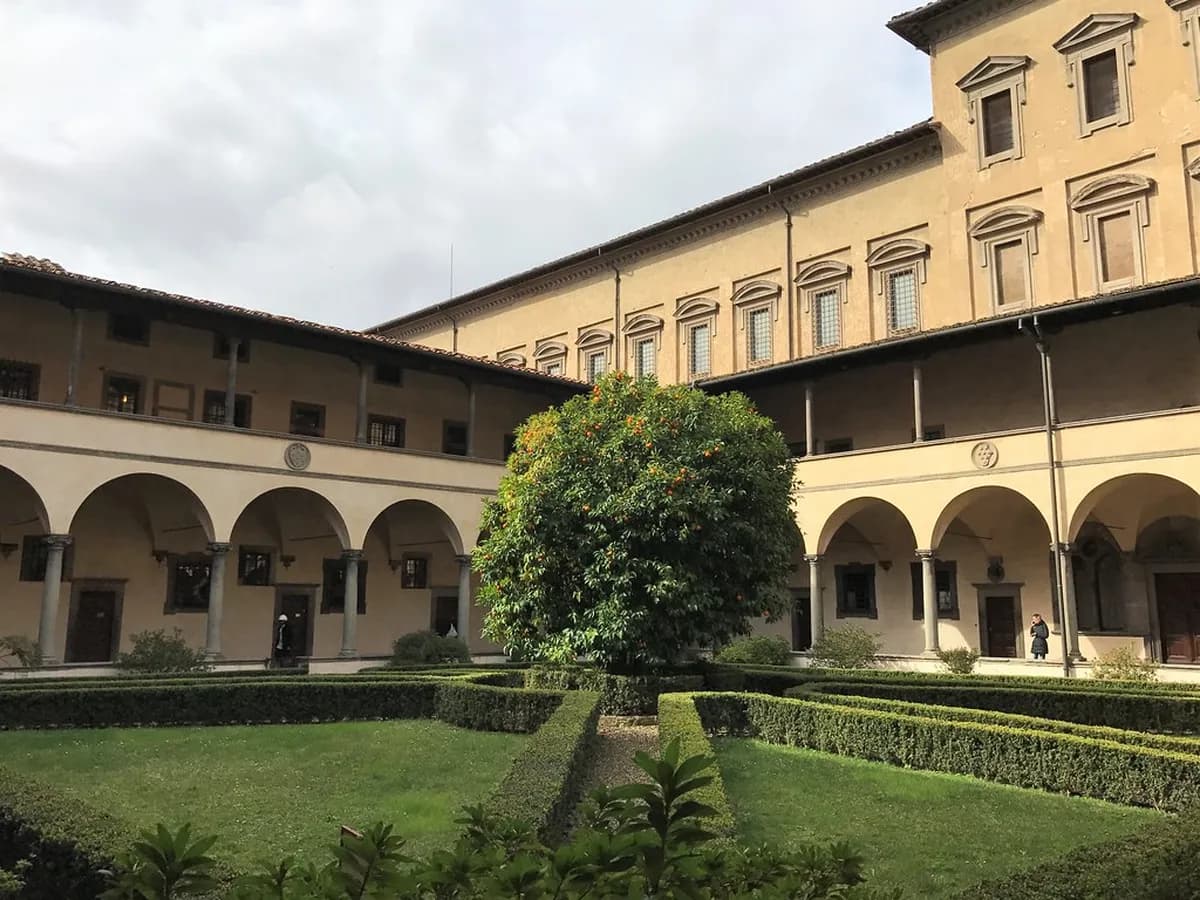
The Italian Renaissance garden — the giardino all'italiana — reached its most refined expression on Medici land. Geometric terraces, clipped hedgerows, and symbolic water features define the style, all laid out to be read like a political text. At Villa di Castello, Giambologna's bronze statuary encodes Medici power through mythological allegory — Neptune, Hercules, and river gods signal dominion over land and sea. Spending an extra 30–45 minutes reading the iconography transforms the garden from a pleasant walk into a genuine history lesson.
Visitors who love green spaces should also explore the best Florence gardens to visit for a broader picture of the city's horticultural heritage. Petraia's terraced garden descends through three levels, each framing a different view of the Arno valley. Early spring and late autumn bring the most comfortable temperatures for extended garden walks, without the harsh summer heat. Seasonal planting at Poggio a Caiano also changes the garden's character significantly between visits.
Family-Friendly and Budget-Conscious Options
The Medici villas are surprisingly wallet-friendly compared to Florence's major paid museums. Poggio a Caiano is free for all visitors, making it an ideal family destination with space to roam without ticket anxiety. Petraia's garden is also free, with the guided interior tour adding only €6 per adult — worth every euro for the Savoy-era ballroom alone. For help navigating advance reservations, the how to book museum tickets in Florence guide covers the booking platforms used by state-managed sites.
The 2013 UNESCO inscription of 14 Medici villas and 2 gardens carries real practical weight for visitors. Conservation rules limit commercial development on listed properties, which keeps the sites quieter and less commercialized than central Florence attractions. Children respond well to the open grounds at both Poggio a Caiano and Castello, where gardens allow movement and exploration rather than enforced quiet. Note that some UNESCO-listed villas — including Careggi and Trebbio — are not open for casual public visits, so always confirm access before making the trip.
Day-Trip Planning and Logistics
Petraia and Castello sit about 5–6 km north of Florence's historic center, reachable in roughly 15 minutes by car. Poggio a Caiano adds another 14 km west and is more awkward by public transport, as bus service from Florence runs infrequently. A rental car or taxi gives you the flexibility to combine all three properties in a single half-day without timing buses. Adding a villa excursion to a 3 days in Florence itinerary works best on day two or three, once city-center priorities are handled.
Arriving before 10:00 am at Petraia or Poggio a Caiano typically means you beat the school groups and tour coaches. Both sites close on Tuesdays, and Poggio a Caiano also closes on the first and third Monday of each month — double-check dates when booking transport. Parking at both villas is free, which removes one logistical friction point for drivers. If visiting in summer, carry water and a hat, as the terraced gardens offer limited shade during midday hours.
Two Hidden Renaissance Gems Off the Beaten Path
On a busy Saturday in Florence, the Uffizi queue can stretch 90 minutes before the doors open. On that same morning, Villa La Petraia might have 20 visitors in the garden — and Poggio a Caiano might have fewer. Both carry UNESCO World Heritage status, both contain significant art, and yet neither appears on most standard Florence itineraries. The gap between their cultural value and their visitor numbers is one of the most striking anomalies in Tuscan tourism.
Petraia and Castello are close enough to walk between — about 500 metres along a residential lane — but the road lacks pavements, so a car remains sensible for families or anyone with mobility needs. History-focused couples tend to get the most from Petraia, where the fresco cycle and Savoy modifications reward close attention. Poggio a Caiano suits fresco enthusiasts and families equally well, with free entry removing all cost barriers. According to Tuscany Private Tours, combining both gems in one morning is the approach that most consistently satisfies independent travelers.
The Medici Villas as a Family Saga
Reading the villas chronologically turns a scattered day trip into a coherent narrative arc. Cosimo de' Medici commissioned Michelozzo to transform earlier fortified retreats into refined Renaissance estates in the mid-15th century. Lorenzo de' Medici then used Poggio a Caiano as a showcase for humanist ideals, filling it with the artists and thinkers who defined the Florentine Renaissance. Centuries later, Victor Emanuel II of the House of Savoy inherited Petraia and left his own mark — including that 1877 covered courtyard that still divides architectural historians.
After the Savoy dynasty ended with Italian unification, the state converted the villas into public museums. That transition preserved interiors that might otherwise have been sold off or altered beyond recognition. Visitors today effectively walk through three distinct historical eras — Medici, Savoy, and modern state stewardship — layered on the same walls. Keeping this character map in mind while touring makes each room feel like a chapter rather than a decorative set piece.
Origins, Power, and the Land: Why the Medici Built Outside Florence
The Medici villas were never purely leisure retreats — they were instruments of political authority dressed in agricultural clothing. Estates like Cafaggiòlo and Trebbio in the Mugello hills began as fortified medieval structures that the Medici inherited through banking wealth and land acquisition. Owning productive farmland around Tuscany signaled permanent, landed power in an era when merchant families were sometimes dismissed as socially inferior to old nobility. The villas made the Medici look like rulers of territory, not merely keepers of ledgers.
Cafaggiòlo served as a summer retreat for Cosimo de' Medici and later hosted Lorenzo the Magnificent during politically turbulent decades. Today, Cafaggiòlo is privately owned and not open for public visits — a reminder that not every famous Medici address is accessible. Trebbio likewise remains largely off-limits to casual visitors, accessible only by appointment through specialist channels. Checking current access status before traveling to either site saves a wasted journey — National Traveller's 12-villa survey includes up-to-date notes on which properties are open.
Architectural Evolution and the Italian Garden
The visual contrast between a medieval Medici fortress and a mature Renaissance villa is stark enough to notice without specialist knowledge. Trebbio and Cafaggiòlo retain crenellated towers and thick perimeter walls that served genuine defensive purposes in the 14th and early 15th centuries. Petraia and Poggio a Caiano swept that defensive posture away, opening to loggias, symmetrical facades, and terraced gardens that invited the landscape in. Michelozzo drove much of this shift, applying humanist principles of proportion and harmony that his contemporaries recognized as revolutionary.
The Italian garden at Castello represents the mature expression of this architectural evolution. Axial paths, sculpted hedges, and mythological water features created an ordered world that reflected — and amplified — Medici prestige. Visitors can trace the shift simply by looking at rooflines and wall thickness: a narrow slit window signals the fortified era; a wide arched loggia signals Renaissance confidence. That simple visual test turns even a brief garden visit into an active architectural exercise.
Private Tour vs. Self-Guided: Honest Trade-Offs
Choosing between a private guided tour and a self-guided visit comes down to budget, group size, and how much context you want delivered on-site. A private driver covering Petraia, Castello, and Poggio a Caiano runs around €300 for up to six people over roughly 4.5 hours — that breaks down to €50 per person in a full vehicle, which is reasonable for the depth of experience. Solo travelers or couples will find that rate harder to justify, making self-guided visits the more sensible default. Pricing and itinerary options from licensed operators appear on Florence Local Guides.
- Private driver tour (up to 6 people)
- Cost: ~€300 total / ~€50 per person in a full group
- Duration: ~4.5 hours
- Effort: Low — transport, narrative, and logistics handled
- Best for: Groups of 4–6 splitting cost; first-time visitors wanting expert context
- Not ideal for: Solo travelers or couples on a tight budget
- Self-guided visit by car or taxi
- Cost: ~€16 per person (villa tickets) plus transport
- Duration: Flexible — half-day or full-day
- Effort: Medium — requires advance research and transport planning
- Best for: Independent travelers, repeat visitors, those with a rental car
- Not ideal for: Visitors unfamiliar with Italian state museum booking systems
- Public transport + self-guided
- Cost: Lowest overall — bus fare plus free or low-cost villa entry
- Duration: Allow extra 30–60 min each way for bus schedules
- Effort: High — infrequent buses, no direct service to Poggio a Caiano
- Best for: Budget backpackers visiting only Petraia and Castello
- Not ideal for: Anyone combining three or more sites in one day
The Medici villas near Florence offer some of Italy's richest Renaissance experiences at a fraction of the cost and crowd levels of the city's major museums. Petraia and Poggio a Caiano alone make a compelling half-day itinerary, and both are free or nearly free to enter. Before finalizing your plans, browse the full range of tourist attractions in Florence to balance villa visits with city-center highlights. With a little advance planning on access and transport, the Medici villas can become the most memorable part of your Tuscany trip.