
Tourist Attractions In Florence
Florence packs more world-class art and architecture into a single square mile than almost any city on earth. Walking its streets feels like flipping through a living art history textbook, but the sheer volume of tourist attractions in Florence can overwhelm first-time visitors. This guide cuts through the noise with practical picks, honest timing advice, and a few hidden gems most travelers overlook.
Key Takeaways
- Pre-book Uffizi, Accademia, and Duomo tickets at least one week ahead to avoid multi-hour queues
- Piazza della Signoria and Ponte Vecchio are free highlights that anchor any Florence itinerary naturally
- The Oltrarno neighborhood offers local atmosphere, Last Supper frescoes, and the Pitti Palace in one walkable area
- Medici villas north of Florence are crowd-free, low-cost, and easy to reach by city bus
- Three full days is the recommended minimum for covering Florence's main attractions without feeling rushed
Piazza della Signoria
Piazza della Signoria is Florence's political and social heart, and visiting costs nothing. The square has anchored Florentine public life since the 14th century, and its energy still feels electric today. A replica of Michelangelo's David stands at the entrance to the Palazzo Vecchio, drawing crowds at every hour.
The Loggia dei Lanzi on the square's south edge functions as a free open-air sculpture museum. Perseus by Cellini and the Rape of the Sabine Women by Giambologna are both here, uncovered and unguarded. Arriving before 9 AM gives you the best chance to photograph these works without tour groups in the frame.
The Fountain of Neptune sits at the northern end and marks the spot where Savonarola was burned in 1498. Locals call the fountain "il Biancone," meaning the big white man, a nickname that has stuck for centuries. Spending an hour here before walking into the Uffizi Gallery makes a natural and logical sequence for any itinerary.
Santa Croce Church
Santa Croce is the largest Franciscan church in the world and one of Florence's most rewarding stops. Entry costs around €8, which includes access to the cloisters and a small museum attached to the building. The church holds the tombs of Michelangelo, Galileo, Machiavelli, and Ghiberti, making it a genuine pantheon of Italian genius.
Unlike the Duomo complex, Santa Croce rarely has lines stretching around the block, even in peak summer. Mornings on weekdays offer the calmest atmosphere for reading the tomb inscriptions and admiring the frescoes. Giotto's frescoes in the Bardi and Peruzzi chapels are among the best early Renaissance paintings still in their original location.
A leather school tucked inside the cloister lets visitors watch artisans at work and buy handcrafted goods directly. The adjoining Piazza Santa Croce is spacious enough to sit, rest, and people-watch without feeling rushed. Pairing Santa Croce with a walk along the Arno afterward makes for a full and satisfying half-day itinerary.
Best Things to Do in Florence
Florence rewards curious travelers who plan ahead and balance the iconic with the unexpected. The city's top draws cluster in a compact historic center, so moving between them on foot is easy. A well-planned day can comfortably cover three or four major tourist attractions in Florence without feeling rushed.
Michelangelo's original David at the Accademia Gallery is a non-negotiable for most first-time visitors. The statue stands nearly 17 feet tall and commands the room in a way photographs simply cannot capture. Pre-booking Accademia Gallery tickets well in advance is strongly recommended, especially between April and October.
The Duomo complex includes the Cathedral of Santa Maria del Fiore, Brunelleschi's dome climb, the Baptistery, and the Bell Tower. Each element requires a separate reservation slot, so planning your Santa Maria del Fiore visit carefully saves time and frustration. The dome climb delivers one of the best panoramic views in any Italian city, covering rooftops all the way to the hills.
Boboli Gardens behind the Pitti Palace offer a rare chance to rest among fountains, grottoes, and cypress alleys. Entry is included with several Florence city passes, making it an easy add-on after exploring the Oltrarno neighborhood. For a broader look at the city's green spaces, the best Florence gardens guide covers several lesser-known options worth your time.
- Accademia Gallery — Michelangelo's David
- Best for: first-time visitors and art lovers
- Cost: around €12-16, pre-booking advised
- Time needed: 1-1.5 hours
- Tip: book tickets at least a week ahead
- Santa Maria del Fiore Duomo Complex
- Best for: architecture and panoramic views
- Cost: dome climb ticket required, ~€30 combo
- Time needed: 2-3 hours for full complex
- Tip: book dome climb slot in advance online
- Uffizi Gallery — Renaissance Masterworks
- Best for: Botticelli, Leonardo, Raphael fans
- Cost: ~€20-25, skip-the-line tickets online
- Time needed: 2-3 hours minimum
- Tip: go on a weekday morning for fewer crowds
- Boboli Gardens — Outdoor Escape
- Best for: families, garden lovers, relaxed pace
- Cost: ~€10, or included with city passes
- Time needed: 1-2 hours
- Tip: bring water and wear comfortable shoes
- Ponte Vecchio — Iconic River Bridge
- Best for: photography and history buffs
- Cost: free to walk across
- Time needed: 20-30 minutes
- Tip: visit at sunrise or just after sunset
Ponte Vecchio and the Arno
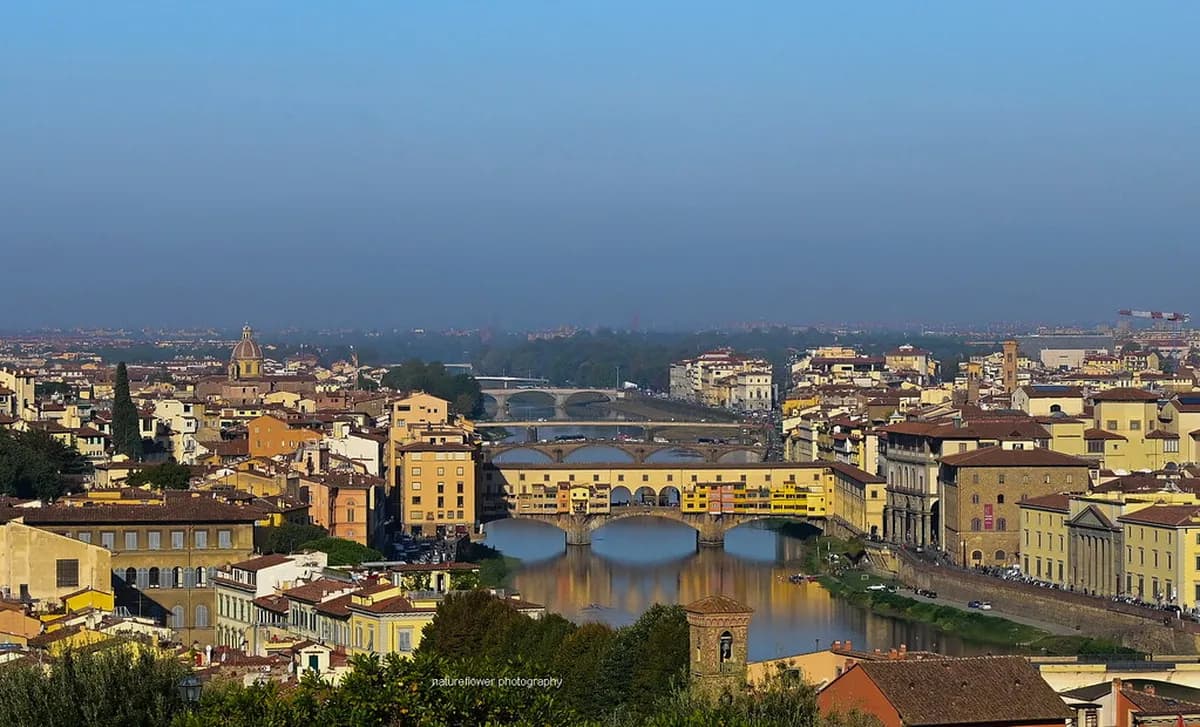
Ponte Vecchio is Florence's oldest and most photographed bridge, and it costs nothing to walk across. Gold and silversmiths have lined the bridge since the 16th century, replacing the butchers who originally traded here. Ferdinand I ordered the switch to jewelers because the smell of meat offended him as he crossed via the Vasari Corridor above.
For the best photographs of the bridge itself, walk a few minutes west to Ponte Santa Trinita. That angle captures the bridge's full silhouette against the Arno and the hills beyond, especially at golden hour. Sunset visits between May and September tend to offer the most dramatic light without requiring any advance planning.
The Vasari Corridor, the elevated passageway running above the bridge, connects the Uffizi to the Pitti Palace. Access to the corridor requires a guided tour and separate booking, but the bridge walk below is always free. Strolling the Arno embankment in either direction from Ponte Vecchio reveals quieter riverfront views that most visitors miss.
Uffizi Gallery Highlights
The Uffizi Gallery is one of the oldest and most important art museums in the Western world. Botticelli's Birth of Venus and Primavera anchor the collection and draw the largest crowds inside the building. Leonardo da Vinci, Raphael, Titian, Caravaggio, and Michelangelo are all represented here, often in multiple rooms.
Booking Uffizi Gallery tickets online before your trip is the single most effective way to avoid wasting hours in line. Walk-up queues during summer can stretch to three hours or more, even on quiet days. A timed entry slot costs a small booking fee but saves significant time and stress on arrival.
Plan to spend at least two to three hours inside, and consider a floor plan before you arrive. The museum covers 45 rooms across two floors, and rushing through defeats the purpose of being there. Audio guides are available at the entrance, and several operators offer guided museum experiences that include skip-the-line access.
The first Sunday of each month offers free entry to state museums including the Uffizi, but crowds are significant. Budget travelers willing to queue early in the morning can take advantage of this without paying the standard admission. Weekday mornings outside of July and August remain the most comfortable time to visit for a relaxed experience.
Piazza Santo Spirito and the Oltrarno
The Oltrarno neighborhood sits across the Arno from the main tourist corridor and feels noticeably more local. Piazza Santo Spirito anchors the area with a modest square, a morning market, and a cluster of casual bars and restaurants. For a deeper look at the neighborhood's character and layout, the Piazza Santo Spirito neighbourhood guide covers the area in full detail.
The Basilica di Santo Spirito holds a rarely discussed treasure: a refectory fresco depicting the Last Supper by Orcagna. Few travelers make the detour, which means you will likely have this remarkable work almost entirely to yourself. For anyone curious about Last Supper paintings across Florence, the city holds several versions spread across different churches and refectories.
The Pitti Palace just a short walk away houses multiple museums and opens directly onto the Boboli Gardens. Visiting in the afternoon allows you to combine the palace, the gardens, and a sunset walk back across Ponte Vecchio. The Oltrarno evening scene, with its mix of artisan workshops, wine bars, and trattorias, is one of Florence's most enjoyable experiences.
Medici Villas Near Florence
Most visitors to Florence never realize that two remarkable Medici villas sit within easy reach of the city center. Villa della Petraia and Villa di Castello both sit north of Florence and are reachable by city bus in under 30 minutes. The Medici villas hidden gems guide covers access details, opening times, and what makes each property worth visiting.
Villa della Petraia offers sweeping views over Florence and the Arno valley from its terraced garden. Entry to the villa and its grounds is free or very low cost compared to the main city museums. The interior rooms preserve original Medici furnishings and frescoes that give a genuine sense of how the family actually lived.
Villa di Castello sits nearby and is celebrated for one of the finest Italian Renaissance gardens still intact in Europe. The garden design directly influenced the style later seen in Boboli, making it a fascinating comparison visit. Both villas tend to be crowd-free even during peak season, which makes them ideal for travelers experiencing museum fatigue.
Frequently Asked Questions
How long do I need in Florence to see the main attractions?
Three full days give most travelers enough time to visit the Uffizi, Accademia, Duomo complex, Ponte Vecchio, and at least one neighborhood like the Oltrarno. A 3-day Florence itinerary helps you allocate time without double-booking or leaving key sites out. One day is possible for highlights only, but very rushed.
What should you not miss in Florence on a short visit?
On a short visit, prioritize Michelangelo's David at the Accademia, the Duomo exterior and dome climb, Piazza della Signoria, and a walk across Ponte Vecchio. The Uffizi deserves at least two to three hours if your schedule allows. Fitting in a meal or coffee in the Oltrarno adds a local flavour without extra planning.
Is the best time to visit Florence in spring or autumn?
April to June and September to October offer the most comfortable temperatures and manageable crowd levels in Florence. Summer brings intense heat and peak tourist pressure at every major site. For a full breakdown of seasonal trade-offs, the best time to visit Florence guide covers each month in detail.
Are there free tourist attractions in Florence worth visiting?
Yes, several significant attractions cost nothing to access. Piazza della Signoria with the Loggia dei Lanzi, Ponte Vecchio, and the exterior of the Duomo are all free. Many churches, including Santa Croce's exterior courtyard, charge no entry. The first Sunday of each month also unlocks free entry to state museums across Italy.
How do I book museum tickets in Florence without getting stuck in long queues?
Book timed entry tickets for the Uffizi, Accademia, and Duomo complex through official museum websites or reputable booking platforms before your trip. Last-minute walk-up tickets are available but involve long waits, especially from April through August. Buying tickets at least one week in advance is the safest approach during peak travel season.
Florence rewards travelers who combine the iconic with the overlooked, from the Uffizi's masterworks to the quiet lanes of the Oltrarno. Booking key museum tickets in advance, arriving early at busy sites, and leaving time for unplanned wandering will improve almost any visit. With the right preparation, the city's remarkable concentration of tourist attractions in Florence becomes genuinely enjoyable rather than overwhelming.