
Fushimi Inari Shrine Gates: Your Complete Visitor Guide
Thousands of vermilion torii gates wind up a forested mountain on the southern edge of Kyoto. Fushimi Inari Taisha is one of the most unmissable tourist destinations in all of Japan, drawing over three million visitors each year. The shrine is free to enter, open around the clock, and deeply woven into Japanese spiritual life.
This guide covers every major stop inside the complex, the best hiking routes, and the smartest timing strategies. Whether you have two hours or a full day, you will find a practical plan that fits your schedule. Expect specific details on access, costs, and local customs that most guides skip.
Must-See Fushimi Inari Attractions
The main entrance is marked by a towering Ōtorii gate, painted in the shrine's signature orange-red color. Stepping through it signals a shift from the busy street into sacred space. Most visitors pause here for photos, but moving past quickly gets you into the quieter zones faster.
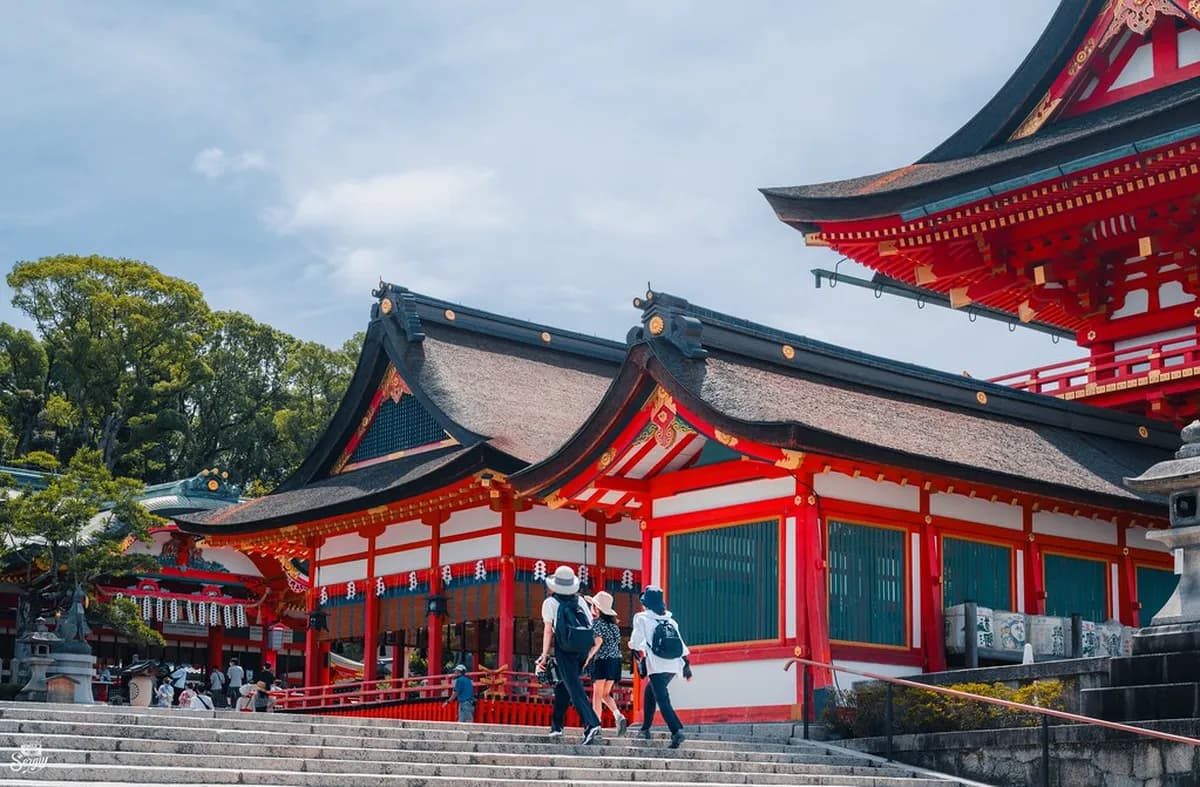
Just beyond the Ōtorii stands the Rōmon, a two-storied wooden gate built in 1589. Toyotomi Hideyoshi donated it as a gift to the shrine, making it one of the oldest structures on the grounds. Look up at the painted details on the second story before moving through.
The Senbon Torii tunnel is the moment most visitors come for, and it genuinely delivers. Thousands of gates packed tightly together create an almost dreamlike corridor of orange light. Walk the right-side path going up and the left side coming down — this is the unwritten local rule. Arriving before 8 a.m. gives you the best chance of a crowd-free photo.
The Main Shrine, or Honden, sits at the base of the mountain and remains the spiritual heart of the complex. Here you can follow the traditional prayer sequence: bow twice, clap twice, pray, then bow once more. The worship hall is modest in size but deeply atmospheric, especially on misty mornings. If you reach the Okusha Hohaisho rest point further up the trail, you have completed roughly half the full hike.
- Great Ōtorii (Main Entrance Gate)
- Type: Shinto torii gate
- Access: Free, open 24 hours
- Best for: First impressions and orientation photos
- Tip: Pass through early to avoid photo queues
- Rōmon Two-Storied Gate
- Type: Historic wooden gate, built 1589
- Access: Free, on the main path
- Best for: Architecture and history lovers
- Tip: Note Toyotomi Hideyoshi's donor inscription
- Senbon Torii Tunnel
- Type: Dense corridor of torii gates
- Access: Free, starts after the main shrine
- Best for: Iconic photos and atmosphere
- Tip: Arrive before 8 a.m. for crowd-free shots
- Main Shrine Honden
- Type: Principal worship hall
- Access: Free, prayer area open daily
- Best for: Spiritual experience and ritual
- Tip: Follow the bow-clap-pray-bow sequence
- Okusha Hohaisho Rest Point
- Type: Mid-mountain rest area and sub-shrine
- Access: Free, roughly 45 minutes up the trail
- Best for: Half-hike turnaround point
- Tip: Grab a snack from vendors here before deciding to summit
Culture, Ritual, and Sacred Forests
Fushimi Inari is dedicated to Inari, the Shinto deity of rice, commerce, and prosperity. Fox statues (kitsune) appear throughout the grounds because foxes are considered Inari's divine messengers. Many statues hold a key, a jewel, or a sheaf of rice — each symbolizing a different blessing. Understanding this symbolism transforms a scenic walk into a genuinely meaningful cultural visit.
After praying at the Honden, look for the Omikuji fortune slip station nearby. You shake a cylindrical box until a numbered stick falls out, then receive the matching paper fortune. Fortunes range from great blessing to great curse — if you draw a bad one, tie it to the designated rack and leave it behind. This small ritual connects you to a tradition practiced at Japanese shrines for centuries.
A lesser-known gem sits just off the main path: Higashimaru-jinja Shrine. This small sub-shrine honors a different deity and sees far fewer visitors than the main complex. It takes only five minutes to detour there, but the quieter atmosphere makes it worth the short walk. Most guides skip it entirely, which is exactly why it rewards curious travelers.
The cedar and cypress forest blanketing the mountain is itself considered sacred in Shinto belief. The Japanese concept of satoyama describes the spiritual bond between people and mountain landscapes. Walking quietly through the forested upper trails — especially on a foggy morning — makes that concept feel real. Avoid using Bluetooth speakers or loud calls on the mountain out of respect for other visitors and the atmosphere.
Hiking Routes and Time Planning
The full round-trip hike to the summit at Ichinomine takes roughly two to three hours at a comfortable pace. The trail gains about 230 meters in elevation, so wear shoes with grip and carry water. Dozens of small sub-shrines and stone fox statues appear along the way, rewarding those who go further. The full route suits fit adults and older teens but can be tiring in summer heat above 30°C.
A popular middle option is hiking to the Yotsutsuji intersection, which takes around 30 to 45 minutes each way. This spot offers a wide city view over Kyoto and makes a natural turnaround point for most visitors. The path up to here is manageable for most fitness levels, including older adults walking at a slow pace. Strollers are not practical above the main shrine area due to steep stone steps.
For a short visit of 30 to 60 minutes, walk through the Senbon Torii tunnel and return after the first set of gates. This lower loop still captures the essence of Fushimi Inari without requiring significant physical effort. It suits families with young children, travelers with mobility concerns, and anyone on a tight itinerary. The tourist attractions in Kyoto are close enough to combine this short route with other sites in a single day.
- Short Loop — Senbon Torii Only
- Time: 30–60 minutes round trip
- Difficulty: Easy, flat to gentle slope
- Best for: Families, first-timers, tight schedules
- Highlight: Tunnel of torii gates and main shrine
- Mid-Hike — Up to Yotsutsuji Viewpoint
- Time: 60–90 minutes round trip
- Difficulty: Moderate, stone steps
- Best for: Casual hikers wanting a city view
- Highlight: Panoramic view over Kyoto from the ridge
- Full Summit — Ichinomine Peak
- Time: 2–3 hours round trip
- Difficulty: Moderate to strenuous
- Best for: Fit hikers and shrine enthusiasts
- Highlight: Summit shrine, dense forest, fewest crowds
Best Times to Visit Fushimi Inari
Early morning visits — arriving by 7 a.m. — offer the clearest photos and the calmest energy on the mountain. Crowds build quickly after 9 a.m. on weekends and during peak seasons like cherry blossom and autumn foliage. A weekday morning in November or late January can feel almost meditative by comparison. If you can only visit on a weekend, aim to be at the gate before 8 a.m. to stay ahead of tour groups.
Night visits are an entirely different experience and are perfectly safe on the main lower path. The torii gates are lit softly after dark, and the atmosphere turns from lively to genuinely atmospheric. Fewer visitors venture up the mountain after 9 p.m., so the upper trails are quiet but darker and unlit. Carry a small flashlight if you plan to hike above the Okusha rest point at night.
Spring and autumn are the most popular seasons, with cherry blossoms in late March and red maples in November. Summer is hot and humid but offers dramatic green forest views with far fewer foreign visitors. Winter mornings can bring frost or occasional light snow, which makes the orange gates look spectacular. Check the local forecast before visiting in January or February if you want to catch a rare snow-dusted photo.
How to Get There and Plan Your Day
JR Inari Station on the Nara Line is the most direct access point, just a two-minute walk from the main gate. Trains run frequently from Kyoto Station and the journey takes about five minutes. Keihan Fushimi Inari Station is a five-minute walk from the shrine and useful if you are coming from Gion or Shijo. There is no large parking area, so public transport is strongly preferred over driving.
Fushimi Inari pairs naturally with the nearby Fushimi Sake District Tour, which is a short walk or taxi ride south. The Fushimi area has several sake breweries offering tastings, making it an ideal afternoon addition. Combining the shrine in the morning with sake tasting afterward is a popular and practical half-day plan. After that, consider heading north to Kiyomizu-dera Temple or the Gion district to round out your day.
Biking is another option if you are comfortable navigating Kyoto's streets, and biking is the best way to make the most of a Kyoto day covering multiple districts. Rental shops near Kyoto Station can set you up for a full-day circuit that includes Fushimi. Just note that the shrine mountain itself is pedestrian only — lock your bike at the station before entering.
Fushimi Inari Shrine Map and Quick Facts
Fushimi Inari Taisha sits at 68 Fukakusa Yabunouchicho, Fushimi Ward, Kyoto, directly beside JR Inari Station. The shrine grounds are open 24 hours a day, every day of the year, with no entry fee for the main complex. Some inner sub-shrines and ritual items like Omikuji slips have small fees, typically 100 to 200 yen. Food stalls near the base sell yakitori (grilled skewers shaped like foxes) and matcha soft serve.
The lower trails and main shrine area are wheelchair accessible with some effort on paved paths. Strollers can manage the flat entry area but will face difficulty on the stone steps beyond the Honden. Restrooms are located near the main shrine and at several points along the lower trail. Service dogs are permitted, but pet dogs on leash are generally discouraged in the ritual spaces.
The shrine is one of Kyoto's most visited sites, so managing your timing is the single most important planning decision. Combine it with the Arashiyama Bamboo Grove or Kinkakuji Golden Pavilion for a well-rounded Kyoto day. Both sites sit within 30 to 40 minutes by public transit, making the combination easy to execute.
Frequently Asked Questions
How long does the Fushimi Inari hike take?
A short visit through the Senbon Torii tunnel takes 30 to 60 minutes. Hiking to the Yotsutsuji viewpoint adds another 30 to 45 minutes each way. The full summit round trip to Ichinomine takes two to three hours at a steady pace. Choose based on your fitness level and how much time your Kyoto itinerary allows.
Is Fushimi Inari stroller or wheelchair friendly?
The flat entry path and main shrine area are manageable for wheelchairs and strollers with assistance. Stone steps begin beyond the Honden and become steep further up the mountain. Most families with strollers turn around after the first torii tunnel section. Comfortable walking shoes are essential for anyone venturing above the base.
Is it safe to visit Fushimi Inari at night?
The lower path and Senbon Torii tunnel are well-visited and reasonably lit after dark, making them safe for most visitors. The upper mountain trails become unlit and isolated beyond the Okusha rest point. Carry a small flashlight if you plan to hike past that point at night. Many visitors find the nighttime atmosphere on the lower trail to be the most atmospheric time of day. Check the Kyoto Higashiyama walking itinerary for ideas on combining an evening shrine visit with nearby districts.
What should I avoid doing at Fushimi Inari Shrine?
Do not walk through the middle of torii gates — the center is reserved for deities, so walk along the sides. Avoid loud conversations, phone calls, or music on the mountain trails. Touching or climbing torii gates is disrespectful and widely frowned upon. Littering anywhere on the mountain is considered deeply inappropriate at a sacred site.
What is an Omikuji and where can I get one at Fushimi Inari?
An Omikuji is a traditional Japanese fortune slip drawn by shaking a numbered stick from a cylinder box. At Fushimi Inari, Omikuji stations are located near the Honden main shrine. Each fortune is ranked from great blessing to great curse. If you draw an unlucky fortune, tie it to the rack provided and leave the bad luck behind at the shrine.
Fushimi Inari Taisha rewards visitors who plan carefully and arrive at the right time. The shrine is free, open all day, and far more layered than a single pass through the famous tunnel reveals. From the two-storied Rōmon gate to the quiet upper forest, each section adds something new to the experience.
Match your route to your fitness level and schedule, and you will leave with far more than just a postcard photo. Pair the visit with a sake tasting in Fushimi or a walk through Gion to make it a genuinely full Kyoto day. The gates are waiting — go early, walk quietly, and let the mountain do the rest.