
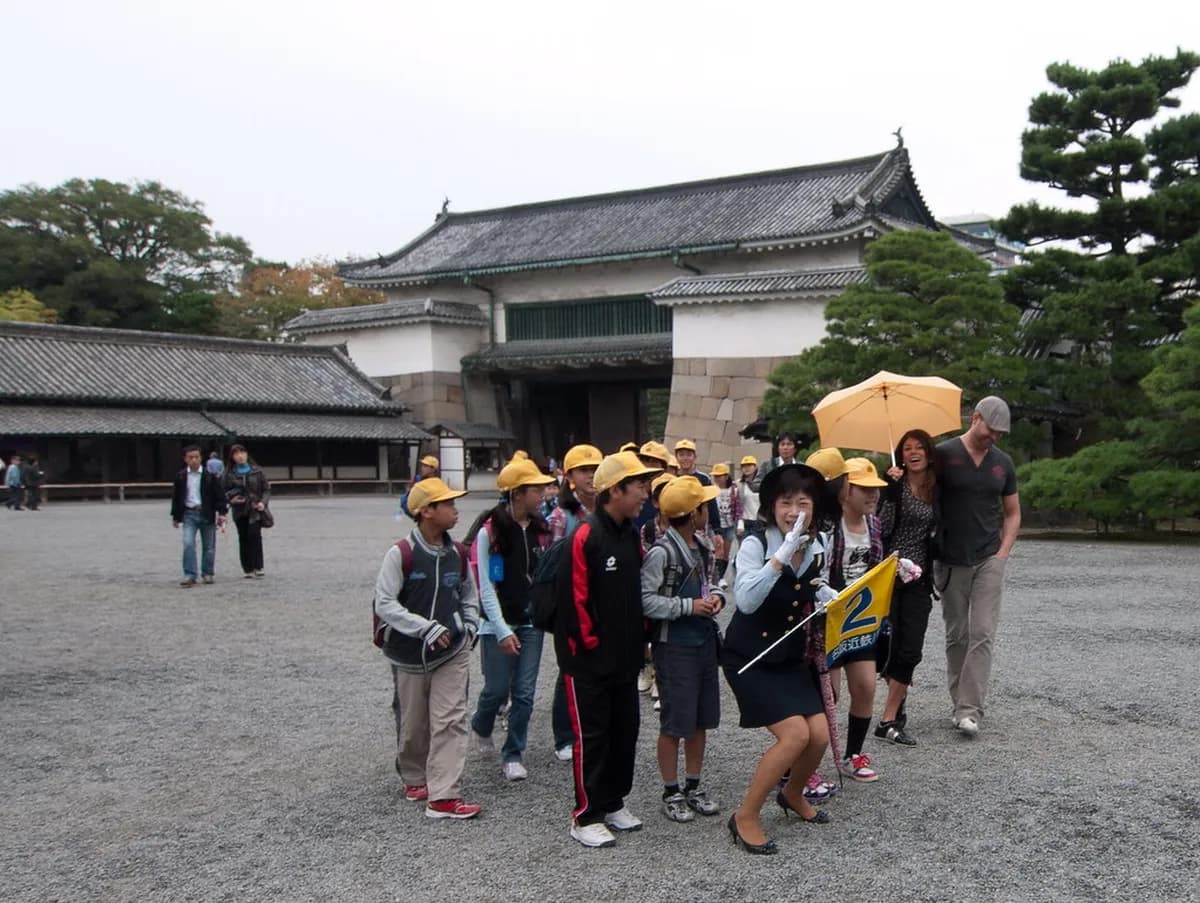
Nijo Castle Kyoto Tour: Nightingale Floors History
Nijo Castle stands as one of Kyoto's most compelling historical landmarks, drawing visitors from around the world. Built in 1603 by Tokugawa Ieyasu, this UNESCO World Heritage Site tells the full rise and fall of Japan's shogunate era. Few places in Japan pack so much layered history into a single, walkable compound. This guide covers the nightingale floors, palace interiors, seasonal gardens, and everything you need to plan a confident visit.
Must-See Attractions at Nijo Castle
The Karamon Gate greets visitors at the entrance to Ninomaru Palace with some of the finest woodcarving in all of Kyoto. Its ornate cranes, pines, and floral reliefs were crafted to impress the imperial court on formal visits. Spend a few minutes here before moving inside — the detail is easy to rush past but worth a close look. Most visitors spend around 90 minutes to two hours exploring the full castle grounds at a relaxed pace.
The Honmaru Palace sits at the heart of the inner enclosure, though it is only open on special occasions during the year. Even when closed, the surrounding stone walls, dry moat, and tower base make for a striking walk. The original five-story keep burned down in 1750 and was never rebuilt, so the stone platform is all that remains. Looking up from that platform gives you a clear sense of how imposing the original structure must have been.
A full loop around the outer walls reveals the castle's defensive engineering more clearly than any exhibit could. The double moats and reinforced gates were designed to slow any attacker long enough for the shogun's guards to respond. Wandering the perimeter also takes you past the Seiryu-en garden, which most visitors overlook in favor of the palace. Allow extra time if you want to see both the main compound and the quieter garden areas to the north.
Ninomaru Palace and the Nightingale Floors
Ninomaru Palace is the centerpiece of any Nijo Castle Kyoto tour, and the nightingale floors are its most famous feature. These floors were engineered to squeak under foot pressure, acting as an early-warning system against intruders. Metal clamps beneath the floorboards rub against a jacket as weight is applied, producing a chirping sound. The effect was intentional: no assassin could cross the hallways silently, day or night.
Inside the palace, six interconnected buildings guide visitors through increasingly formal reception rooms. The innermost chambers were reserved for the shogun, while outer rooms handled lower-ranking guests and officials. More than 2,000 wall paintings — many attributed to the Kano school of artists — cover nearly every surface, as noted by Sailko via Wikimedia Commons. Gold leaf backgrounds and bold nature scenes were chosen to project power and calm authority at the same time.

Photography is not permitted inside the palace buildings, so put your camera away at the entrance. This rule applies to all interior rooms, including the painted corridors and nightingale floor hallways. The restriction feels frustrating at first, but it pushes you to slow down and absorb the space more fully. Exterior shots of the palace rooflines and gardens are allowed and offer some of the best compositions on the grounds.
Plan to spend at least 40 to 50 minutes inside Ninomaru Palace if you want to move at a comfortable pace. Guided audio tours are available in English and add helpful context to each room without requiring a guide. Arrive before 10:00 AM on weekdays to avoid the largest tour groups, which tend to cluster mid-morning. The palace route is one-way, so there is no need to plan your path — just follow the marked corridor.
History of Nijo Castle and the Tokugawa Shogunate
Tokugawa Ieyasu ordered the construction of Nijo Castle in 1601, completing it two years later as a Kyoto residence. The castle was designed to demonstrate the Tokugawa clan's authority over the emperor and the imperial court nearby. Its location just west of the Imperial Palace was deliberately chosen to signal political dominance. The third shogun, Tokugawa Iemitsu, expanded the compound significantly between 1624 and 1626 for a planned imperial visit.
The castle's most dramatic historical moment came in 1867, when the 15th Tokugawa shogun announced his resignation here. That declaration ended over 260 years of military rule and returned power to the emperor during the Meiji Restoration. Few sites in Japan mark a political turning point as precisely as this single room in Ninomaru Palace. Standing in that space today, it is easy to feel the weight of what was decided within those painted walls.
After the Meiji era began, Nijo Castle served briefly as an imperial detached palace before being transferred to Kyoto city. UNESCO recognized it as a World Heritage Site in 1994, alongside 16 other historic monuments across Kyoto. Explore more of Kyoto's remarkable heritage through our guide to tourist attractions in Kyoto for broader trip planning. The castle's dual role — as a seat of power and now as a public museum — gives it a unique place in Japanese history.
Gardens, Seasonal Beauty, and Scenery
The Ninomaru Garden is a classic example of Edo-period stroll garden design, built around a central pond. Three small islands connected by stone bridges sit at its heart, framed by pruned pines and carefully placed rocks. The garden was designed for viewing from the main hall rather than for walking through, which shapes its composition. It rewards slow observation more than a quick pass — find a bench and let the layout settle before moving on.
Spring brings one of Nijo Castle's most celebrated seasonal displays, with cherry blossoms lining the inner enclosure. The castle hosts a dedicated sakura event each year, often featuring evening illuminations in late March and early April. Autumn foliage transforms the Seiryu-en garden from late October through mid-November with deep reds and golds. Special nighttime light-up events during autumn draw crowds, so booking daytime visits on weekdays helps you avoid peak congestion.
Summer is quieter for foliage but offers lush greenery and long daylight hours for exploring the full grounds. The castle opens at 8:45 AM, so an early start beats the heat and the tour groups simultaneously. Winter visits have a quiet charm — bare trees reveal the garden's structural bones more clearly than any other season. Each season offers a genuinely different experience, making repeat visits worthwhile if you are spending multiple days in Kyoto.
Practical Visitor Information for Nijo Castle
Nijo Castle is open daily except Tuesdays in January, July, August, and December — confirm the schedule before visiting. General admission is ¥1,300 for adults, with reduced rates for junior high students and younger visitors. Entry to Ninomaru Palace costs an additional ¥500, which most visitors find well worth it for the nightingale floors alone. The grounds close at 5:00 PM, with last entry at 4:00 PM, so plan to arrive no later than early afternoon.
Comfortable walking shoes matter here — the grounds cover over 275,000 square meters of varied surfaces. Carry a light bag since bag storage lockers are available near the entrance for larger luggage. The site is partially wheelchair accessible, with ramp access to key outdoor areas, though the palace interior has some steps. A printed English map is available at the ticket gate and helps orient you before stepping inside.
- Opening Hours
- Open: 8:45 AM – 5:00 PM (last entry 4:00 PM)
- Closed: Tuesdays in Jan, Jul, Aug, Dec
- Best time: Weekday mornings before 10:00 AM
- Admission Fees
- Adults: ¥1,300
- Ninomaru Palace extra: ¥500
- Junior high and below: reduced rate
- Photography Rules
- Exterior: allowed throughout grounds
- Interior: strictly prohibited inside palace buildings
- Accessibility
- Outdoor paths: mostly accessible
- Palace interior: some steps present
- Lockers: available near main entrance
How to Reach Nijo Castle
The easiest way to reach Nijo Castle is via the Kyoto Municipal Subway Tozai Line to Nijojo-mae Station. From the station exit, the castle's main gate is a two-minute walk directly across the road. The Tozai Line connects to Kyoto Station via a transfer at Karasuma Oike, adding about 15 minutes to the trip. Subway IC cards like Suica and ICOCA are accepted, making the journey seamless from most parts of the city.
Several city bus routes also stop at Nijo-jo-mae on Horikawa Dori, including buses from Kyoto Station and Gion. Bus journeys typically take 20 to 35 minutes depending on traffic, which can be heavy during peak tourist seasons. Taxis from central Kyoto cost roughly ¥800 to ¥1,200 and are practical for early-morning visits before buses fill up. Many travelers also enjoy cycling to the castle — biking is the best way to make the most of Kyoto's flat city center.
Nijo Castle pairs naturally with nearby attractions like Kinkaku-ji Golden Pavilion, which is about 20 minutes north by bus or bike. Combining both into one day is manageable if you start at the castle before 9:30 AM and keep palace time to an hour. After Nijo, heading east toward Gion district for the evening makes for a well-rounded Kyoto day. Planning your route in advance avoids backtracking across the city and saves meaningful travel time.
Frequently Asked Questions
What makes the nightingale floors at Nijo Castle special?
The nightingale floors in Ninomaru Palace were engineered to squeak as a security measure against intruders. Metal clamps beneath the boards rub against a jacket when weight is applied, creating a chirping sound. No stealthy approach was possible across these hallways, day or night. The effect still works today — you will hear the floors respond with every step you take inside the palace.
How much time should I plan for a Nijo Castle visit?
Most visitors need around 1.5 to 2.5 hours to see the main highlights at a comfortable pace. Ninomaru Palace alone takes 40 to 50 minutes if you read the audio guide content. Add garden time and an outer wall walk, and a half-day budget is a safe plan. Arriving before 10:00 AM on a weekday keeps crowds manageable throughout your visit.
Is Nijo Castle worth visiting on a short Kyoto trip?
Yes — Nijo Castle offers a combination of architectural detail, living history, and garden scenery that very few Kyoto sites match in a single stop. It is especially valuable for first-time visitors trying to understand the shogunate era. For a broader one-day Kyoto itinerary, explore our guide to tourist attractions in Kyoto to pair it with other key sites efficiently.
Can I take photos inside Nijo Castle?
Photography is not allowed inside any of the palace buildings, including the nightingale floor hallways and painted rooms. Outdoor photography across the grounds, gardens, and exterior architecture is freely permitted. Many of the best shots come from the garden-facing verandas and the Karamon Gate approach. Plan to rely on memory and printed guides for the interior experience.
What is the best season to visit Nijo Castle?
Spring (late March to early April) and autumn (late October to mid-November) offer the most visually rewarding visits. Cherry blossoms and autumn foliage both transform the castle grounds dramatically. Evening illumination events during these seasons are popular but require advance planning. Winter and summer visits are quieter and offer a more peaceful experience on the grounds.
Nijo Castle delivers a rare combination of architectural wonder, living history, and seasonal beauty in one compact site. The nightingale floors alone justify the visit, but the palace paintings, garden design, and historical significance add layers that stay with you long after. Whether you have two hours or half a day, planning your timing and route in advance makes the experience significantly richer. From Nijo, Kyoto's other great landmarks — like Kiyomizu-dera Temple and the Arashiyama Bamboo Grove — are all within easy reach for a full day of exploration.